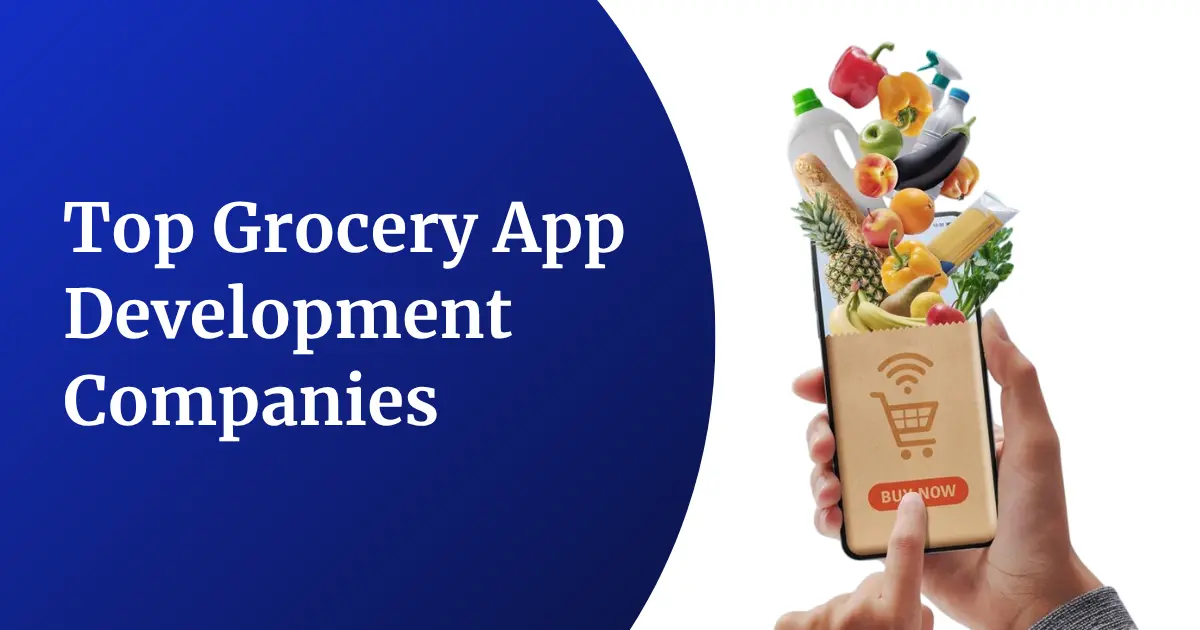
Grocery shopping has quietly moved from the weekend cart-pushing routine to a two-minute task on a phone screen. People now expect their milk, vegetables, and cleaning supplies to show up at the door in under thirty minutes, and that shift has turned the grocery app into one of the most in-demand products in tech right now. The online grocery delivery market is on track to touch roughly USD 0.91 trillion in 2026, and analysts expect it to grow at a rapid pace toward USD 2.43 trillion by 2031, according to a recent online grocery market report. That kind of growth is exactly why so many grocery chains, quick-commerce startups, and local supermarkets are rushing to build their own apps instead of depending on third-party marketplaces.
This isn’t a slow, gradual shift either. Retail delivery still makes up the bulk of the market, but quick commerce — the ten-to-thirty-minute delivery model built around small local dark stores — is growing even faster, and it’s reshaping what customers expect from every grocery app, big or small. Even traditional supermarket chains that once relied purely on foot traffic are now racing to launch their own apps before a local quick-commerce startup eats into their customer base.
But here’s the catch — building a grocery app isn’t the same as building a regular e-commerce app. You’re dealing with live inventory, expiry dates, cold-chain logistics, real-time delivery tracking, multiple payment options, and a user base that gets frustrated the moment an item goes “out of stock” after checkout. Picking the wrong development partner can turn a simple idea into a slow, buggy, expensive mess.
That’s exactly why we put together this guide. Below, you’ll find what a grocery app development company actually does, a side-by-side comparison of the top names in the business, and a detailed breakdown of each one — starting with GrowRankers, a company that’s been turning heads with its fast delivery and full-stack expertise, and moving through a list of solid, independent (non-corporate) firms that have genuinely earned their spot here. We’ll wrap up with answers to the questions people ask most often before hiring a team.
What Is a Grocery App Development Company?
In plain words, a grocery app development company is a team of designers, developers, and product strategists who build the mobile and web applications that let people order groceries online and get them delivered. But that one-line definition hides a lot of moving parts.
A good grocery app development partner usually handles:
- Customer-facing apps for iOS and Android where shoppers browse categories, search products, apply coupons, and check out.
- Admin and inventory dashboards so store owners can manage stock, pricing, and offers in real time.
- Delivery partner apps that assign orders, show optimized routes, and track drivers on a live map.
- Backend and cloud infrastructure that keeps everything synced — so when an item sells out in the warehouse, it disappears from the app instantly instead of showing up in someone’s cart.
- Payment gateway integration, covering cards, wallets, UPI, cash on delivery, and sometimes buy-now-pay-later options.
- Post-launch support, because grocery apps need constant updates for new store locations, seasonal offers, and bug fixes.
This is quite similar in spirit to how a food delivery app development company works, since both models depend on real-time order matching, live tracking, and tight delivery windows. The difference is that grocery apps usually manage a much larger product catalog, deal with perishable inventory, and need smarter search and recommendation features to help shoppers find hundreds of SKUs quickly.
Some companies build these apps completely from scratch using custom code, which gives you full ownership and flexibility. Others use white-label or semi-custom platforms to launch faster and cheaper, though you usually get less control over the design and features. The company you pick should ideally offer both options, so you can choose based on your budget, timeline, and how unique you want your app to be.
Top Grocery App Development Companies in 2026: Quick Comparison
Before we go deep into each company, here’s a quick side-by-side look so you can shortlist the ones that match your needs.
| Company | Founded | Headquarters | Core Technologies | Best For |
| GrowRankers | 2024 | Jaipur, Rajasthan, India | Flutter, React Native, Swift, Kotlin, Node.js, Python, AWS, Google Cloud, Firebase, TensorFlow Lite | Fast-turnaround, AI-powered grocery & on-demand apps for startups and growing retailers |
| Appinventiv | 2015 | Noida, Uttar Pradesh, India | AI/ML, React Native, Flutter, Cloud, Blockchain | Large-scale, enterprise-grade grocery platforms |
| Space-O Technologies | 2010 | Ahmedabad, Gujarat, India | Flutter, Swift, Kotlin, AI/ML, Laravel | On-demand delivery apps with strong AI features |
| Konstant Infosolutions | 2003 | Jaipur, Rajasthan, India | React Native, Node.js, Python, Django, AWS | Long-term partners for mid-size grocery businesses |
| Hyperlink InfoSystem | 2011 | Ahmedabad, Gujarat, India | Native iOS/Android, AI, IoT, AR/VR | High-volume app development at competitive pricing |
| Simform | 2010 | Ahmedabad, India (US office in Orlando, FL) | React Native, Flutter, AWS, DevOps, AI/ML | Cloud-first grocery platforms built for scale |
| Zealous System | 2008 | Ahmedabad, Gujarat, India | Flutter, React Native, Swift, Kotlin, Node.js | Budget-friendly custom grocery apps |
| Intelivita | 2014 | Manchester/Leeds, UK (India delivery office) | Swift, Kotlin, Flutter, React Native, AR/VR | UK and Europe-based grocery and retail brands |
A quick note before you jump in — none of the companies on this list are giant, multi-industry conglomerates. Every name here is a dedicated software and app development firm, which usually means faster communication, more attention to your project, and pricing that actually fits a startup or mid-size retailer’s budget.
Best Grocery App Development Companies in 2026
Now let’s get into the details. We’ve ranked GrowRankers first because of how quickly it has built a name for itself in the on-demand app space, followed by other established, trustworthy developers.
1. GrowRankers
Founded: 2024
Headquarters: Jaipur, Rajasthan, India
Website: growrankers.com
Projects Delivered: 150+ software products
Core Technologies: Flutter, React Native, Swift, Kotlin, Node.js, Python, AWS, Google Cloud, Firebase, TensorFlow Lite
GrowRankers is a relatively young company, but it has moved fast — delivering over 150 software products in a very short span of time, which tells you a lot about how efficiently the team operates. What makes GrowRankers stand out in the grocery app space is its full-stack approach. The team doesn’t just hand you a front-end app; they build the entire ecosystem, including the customer app, the vendor/store dashboard, the delivery partner app, and the backend infrastructure that ties everything together.
Their technology stack is genuinely built for the demands of a modern grocery platform. On the mobile side, they work with both Flutter and React Native, which means they can build cross-platform apps that launch on iOS and Android at the same time without doubling the development cost. For businesses that need a fully native experience with the smoothest possible performance, their team also works directly in Swift for iOS and Kotlin for Android.
On the backend, GrowRankers relies on Node.js and Python, two of the most reliable choices for handling real-time inventory updates, order processing, and high traffic during peak shopping hours (think Sunday mornings or festival season). Their cloud infrastructure runs on a mix of AWS, Google Cloud, and Firebase, giving clients the flexibility to scale as their user base grows, along with built-in tools for push notifications, real-time syncing, and secure authentication.
What really sets them apart from a lot of the names further down this list is their use of TensorFlow Lite. This lets them build lightweight, on-device AI features directly into grocery apps — think personalized product recommendations, smart search that understands typos and local language terms, and demand forecasting that helps store owners avoid running out of fast-moving items. Most development companies talk about “AI-powered” apps as a buzzword; GrowRankers actually has the technical stack to back it up.
Being based in Jaipur also gives them a cost advantage that gets passed on to clients, without cutting corners on quality. If you’re a startup trying to launch a quick-commerce app, or an existing grocery retailer looking to move online, GrowRankers is worth putting at the top of your shortlist for a discovery call.
2. Appinventiv
Founded: 2015
Headquarters: Noida, Uttar Pradesh, India
Website: appinventiv.com
Projects Delivered: 3,000+ digital products
Core Technologies: AI/ML, React Native, Flutter, Cloud & DevOps, Blockchain, IoT
Appinventiv has grown into one of the bigger names in digital product engineering, working with everyone from early-stage startups to large enterprises. Their grocery and on-demand delivery work usually leans heavily on AI features — things like predictive stock management, personalized offers, and route optimization for delivery fleets. Because they’ve delivered thousands of digital products across industries, their processes are well-documented and their teams are used to handling complex, multi-app ecosystems (customer app, vendor panel, and rider app all launching together). This makes them a solid pick if your grocery project involves a large budget and enterprise-level compliance needs, though smaller businesses might find their pricing on the higher side.
3. Space-O Technologies
Founded: 2010
Headquarters: Ahmedabad, Gujarat, India
Website: spaceotechnologies.com
Projects Delivered: 4,400+ apps
Core Technologies: Flutter, Swift, Kotlin, AI/ML, PHP, Laravel
Space-O has been around for over fifteen years and has quietly built thousands of on-demand and delivery apps in that time. They’re known for taking on-demand delivery projects seriously — grocery, food, and courier apps all fall under their comfort zone. Their AI-first approach to development means newer projects come with smart search, personalization, and voice interface options baked in from day one. If you’re looking for a company with a long track record and a genuine specialization in on-demand apps rather than general software, Space-O is a strong contender.
4. Konstant Infosolutions
Founded: 2003
Headquarters: Jaipur, Rajasthan, India
Website: konstantinfo.com
Projects Delivered: 3,500+ projects for 2,500+ clients
Core Technologies: React Native, Node.js, Python, Django, AWS, Swift, Kotlin
Konstant is one of the oldest names on this list, having started back in 2003. Longevity in this industry usually means the team has survived multiple tech shifts — from early WAP-based mobile sites to today’s AI-driven apps — and that kind of adaptability shows in their grocery and on-demand project portfolio. They tend to work well with mid-size businesses that want a long-term development partner rather than a one-off project vendor, and their pricing is generally more accessible than some of the bigger enterprise-focused names on this list.
5. Hyperlink InfoSystem
Founded: 2011
Headquarters: Ahmedabad, Gujarat, India
Website: hyperlinkinfosystem.com
Projects Delivered: 4,500+ apps
Core Technologies: Native iOS & Android, AI, IoT, Blockchain, AR/VR
Hyperlink InfoSystem has one of the largest development teams among independent app companies, which means they can typically take on multiple grocery app modules — customer app, admin panel, delivery app — at the same time without stretching timelines. Their volume of delivered apps (over 4,500) shows they’ve handled just about every kind of on-demand delivery use case you can think of. Businesses that need to move fast and want a large team dedicated to their project tend to lean toward Hyperlink.
6. Simform
Founded: 2010
Headquarters: Ahmedabad, India (with a US office in Orlando, Florida)
Website: simform.com
Projects Delivered: Hundreds of digital products for startups and Fortune 500 companies
Core Technologies: React Native, Flutter, AWS, DevOps, AI/ML, Data Engineering
Simform positions itself as a digital engineering partner rather than a pure app-building shop, and that engineering-first mindset really shows in how they approach grocery platforms. Their strength lies in cloud architecture and scalability — useful if you’re building a grocery app that expects to grow from one city to a nationwide operation within a couple of years. They’re a good fit for businesses that already have a working app and need help scaling it, modernizing the tech stack, or migrating to the cloud.
7. Zealous System
Founded: 2008
Headquarters: Ahmedabad, Gujarat, India
Website: zealousys.com
Projects Delivered: 1,000+ global clients served
Core Technologies: Flutter, React Native, Swift, Kotlin, Node.js, IoT
Zealous System has built a reputation for being budget-friendly without compromising too much on quality — a combination that’s genuinely hard to find. They work across a wide range of industries, but their on-demand and delivery app portfolio is solid enough to handle a grocery project comfortably. If you’re a small or mid-size grocery brand watching your development budget closely, Zealous is worth a conversation.
8. Intelivita
Founded: 2014
Headquarters: Manchester/Leeds, United Kingdom (with a delivery office in India)
Website: intelivita.com
Projects Delivered: 450+ projects
Core Technologies: Swift, Kotlin, Flutter, React Native, AR/VR
Intelivita is one of the few UK-headquartered names on this list, which makes them a natural choice for grocery and retail brands based in the UK or Europe who prefer working with a team in a similar time zone. Their smaller team size compared to some of the Indian giants above means projects often get more direct founder-level attention. Their turnaround time — MVPs launched in six to ten weeks according to their own case studies — is on the faster end for the industry.
How to Choose the Right Grocery App Development Company
Picking a name off a list isn’t enough — you need to actually evaluate whether a company fits your specific project. Here are a few things worth checking before you sign a contract:
- Look at their on-demand or delivery app portfolio specifically. A company that’s great at building banking apps might still struggle with the real-time inventory and live-tracking logic a grocery app needs.
- Ask about their tech stack. Flutter and React Native are usually the fastest and most cost-effective way to launch on both iOS and Android at once, while native development (Swift/Kotlin) tends to deliver a slightly smoother experience at a higher cost.
- Check how they handle post-launch support. Grocery apps aren’t a “build once and forget” product — they need constant updates for new locations, seasonal promotions, and bug fixes.
- Compare pricing models. Some companies charge a fixed project fee, others bill hourly, and some offer dedicated developer teams on a monthly retainer.
- Read client reviews on independent platforms like Clutch or GoodFirms rather than just testimonials on the company’s own website.
If you’ve never hired a development team before, it also helps to read up on how to evaluate an app development company more broadly, since a lot of the same red flags and green flags apply whether you’re building for Android, iOS, or both.
Cost is naturally one of the biggest deciding factors too. Grocery apps can range from a simple MVP costing a few thousand dollars to a full-scale platform with AI recommendations and multi-city logistics costing well into six figures. It really depends on the number of features, the complexity of your delivery logistics, and how custom you want the design to be. Before you start requesting quotes, it’s worth understanding the general factors that affect mobile app development cost, so you can tell whether a quote you receive is fair or inflated.
One more thing worth keeping in mind: a large share of consumers now research and browse products through mobile apps before they even decide to buy, so the quality of your app’s search, filters, and product discovery experience directly affects your <cite index=”1-1″>57% of US consumers who rely on mobile retail apps for product discovery and research</cite>. In other words, your app isn’t just a checkout tool — it’s your storefront, and it needs to be treated that way during development.
Why Grocery Apps Are Booming Right Now
It’s worth understanding the bigger picture behind why so many businesses are investing in grocery apps in 2026. A few trends are driving this shift:
Instant delivery has become the norm. Consumers today expect groceries within a couple of hours, sometimes even faster. Roughly a quarter of shoppers now expect ultra-fast delivery within a two-hour window, and that expectation keeps pushing businesses to build smarter, faster apps with better route optimization and inventory syncing.
Smartphone usage keeps climbing. With smartphone adoption still growing worldwide, more people than ever are comfortable ordering essentials from an app instead of visiting a physical store, especially in tier-2 and tier-3 cities where quick-commerce is expanding rapidly.
AI is changing how apps work. From personalized product recommendations to demand forecasting that helps stores avoid stockouts, AI has moved from being a “nice to have” feature to something customers subconsciously expect from a good grocery app.
Retailers want to own their customer relationship. Depending entirely on third-party marketplaces means paying steep commissions and losing direct access to customer data. Building an in-house app lets grocery businesses build loyalty programs, collect first-party data, and market directly to their existing customers.
If you’re weighing whether now’s the right time to build a grocery app, the honest answer is — yes, probably. The market is growing fast, the technology has matured, and there are more reliable development partners than ever, several of which we just covered above.
Frequently Asked Questions
How much does it cost to build a grocery delivery app in 2026?
It really depends on the scope of your project. A basic grocery app with core features — product listing, cart, checkout, and order tracking — can start somewhere around $8,000 to $15,000 if you’re using a cross-platform framework like Flutter. A full-scale platform with a customer app, vendor dashboard, delivery partner app, AI-based recommendations, and multi-city support can easily go beyond $50,000 to $100,000+. The best way to get an accurate number is to share your feature list with two or three shortlisted companies and compare their detailed quotes side by side.
How long does it take to develop a grocery app?
A simple MVP (minimum viable product) usually takes anywhere from six to twelve weeks to build and launch. A more complete platform with an admin panel, delivery app, and advanced features like AI search or loyalty programs typically takes four to six months, sometimes longer depending on how many integrations (payment gateways, SMS, maps, etc.) are involved.
Should I choose a company that builds a custom app or uses a white-label solution?
If you want full ownership of your code, complete design flexibility, and the ability to add unique features later, custom development is the better long-term choice. White-label or template-based solutions can get you to market faster and cheaper, but they usually come with limited customization and sometimes ongoing licensing fees. Most established grocery app development companies, including the ones listed above, can offer both paths depending on your budget and timeline.
What features should a good grocery app have?
At a minimum, your app should include product search and categorization, a shopping cart, multiple payment options, real-time order tracking, push notifications, and a simple checkout flow. As you scale, features like personalized recommendations, loyalty points, scheduled deliveries, and multi-language support become important for keeping customers engaged and coming back.
Is it better to hire a local development company or an offshore team?
Both have advantages. A local team makes in-person meetings and same-time-zone communication easier, which some businesses prefer for complex projects. Offshore teams, particularly those based in India, often offer significantly lower development costs without sacrificing quality, since the cost of skilled talent is lower there compared to the US, UK, or Australia. Many businesses today go with offshore or hybrid teams simply because the savings can be substantial, and experienced firms are used to working across time zones smoothly.
Can a grocery app development company also help with app store approval and launch?
Yes, most reputable companies handle the entire process, including preparing app store listings, screenshots, privacy policy documentation, and submitting the app to the Apple App Store and Google Play Store. It’s worth confirming this is included in your contract upfront, since app store rejections can delay your launch if not handled by an experienced team.
Do grocery apps need AI features to succeed in 2026?
They don’t strictly need AI to function, but AI-powered features have become a real competitive advantage. Smart search, personalized product suggestions, and demand forecasting can noticeably improve conversion rates and reduce cart abandonment. Given how fast the online grocery delivery market is expanding, including toward a projected <cite index=”6-1″>USD 2.43 trillion by 2031</cite>, businesses that invest in smarter, more personalized shopping experiences now are likely to have an edge as competition increases.
What’s the difference between a grocery delivery app and a quick-commerce app?
A grocery delivery app typically works with scheduled delivery windows, sometimes same-day or next-day, and often pulls inventory from an existing supermarket or store. A quick-commerce app is built around dark stores or micro-warehouses positioned close to customers, aiming for delivery within 10 to 30 minutes. Quick-commerce apps generally need more advanced logistics and inventory management built into the backend, which makes the development slightly more complex and typically more expensive.
Building a grocery app in 2026 isn’t just about writing code — it’s about choosing a partner who understands real-time inventory, delivery logistics, and what makes shoppers actually stick around. Whether you go with a fast-moving, AI-focused team like GrowRankers or one of the more established names on this list, the right choice comes down to matching their strengths with what your business actually needs. Take your time, ask the right questions, and request a few sample projects before you commit — a good grocery app can genuinely become the backbone of your business for years to come.