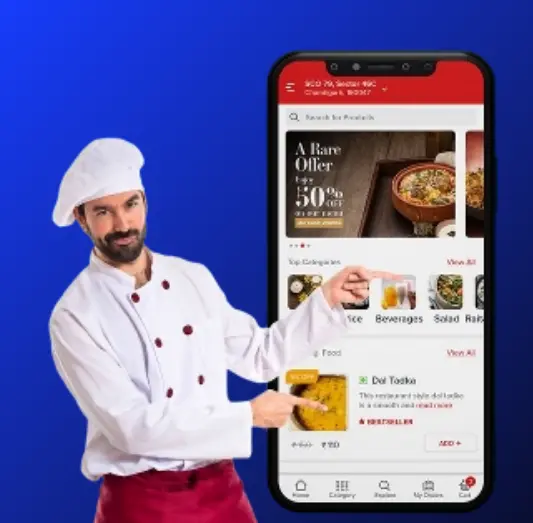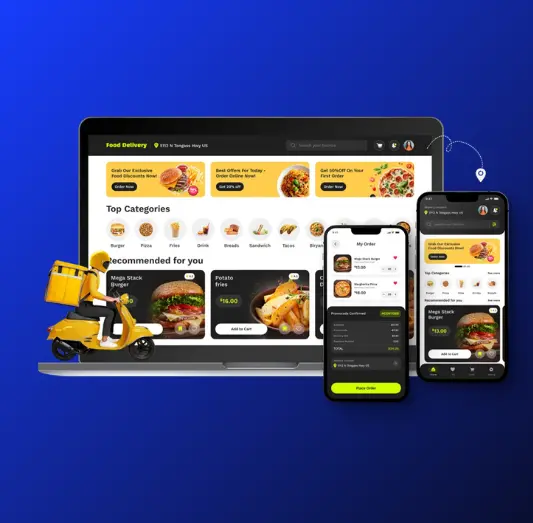
If you run a restaurant, a cloud kitchen, or a food chain, you already know one thing — people order from their phones now. They don’t stand in a queue anymore. They open an app, scroll the menu, tap a few buttons, and wait for the food to show up at their door. If your restaurant doesn’t have a smooth app for this, you’re losing orders every single day to the restaurant next door that does.
That’s why so many restaurant owners are now searching for the right team to build their app. But here’s the problem — there are hundreds of app development companies out there, and picking the wrong one can cost you months of time and a lot of money. So we did the homework for you.
In this guide, we’ve listed and compared the top restaurant app development companies of 2026. We looked at their experience, the technology they use, the kind of projects they’ve delivered, and how well they actually understand the restaurant business — not just app coding. Whether you want a simple ordering app or a full platform with delivery tracking, loyalty points, and kitchen management, this list will help you find the right partner without wasting weeks on research. You can also check our detailed breakdown of the best food delivery app development company options if delivery is your main focus.
Let’s get into it.
Why Restaurant Apps Matter More Than Ever in 2026
A few years back, having a website with your menu on it was more or less enough. That’s not true anymore. Today, customers open their phone, tap an app icon, and expect the whole experience — browsing, ordering, paying, and tracking — to happen in under two minutes. If your restaurant makes them wait, scroll through a clunky interface, or call in to place an order, they’ll simply move to a competitor who made it easier.
This shift isn’t just a feeling — the numbers back it up clearly. The online food ordering and delivery space has kept growing year after year, and restaurants that don’t have their own app are increasingly dependent on third-party platforms that eat into their profit margins through high commission fees. Every order that goes through a big aggregator instead of your own branded app is money you didn’t have to give away. That’s the real reason so many restaurant chains, cloud kitchens, and even small local eateries are now investing in their own dedicated apps instead of relying only on outside platforms.
There’s also a customer loyalty angle here that’s easy to miss. When a customer orders through a big delivery platform, that platform owns the relationship, not you. They see the offers, the notifications, and the recommendations from that platform’s app — not from your brand. But when a customer downloads your own restaurant app, you own that relationship completely. You can send them a personalized offer on their birthday, remind them about their favorite dish, or notify them the moment a new menu item drops. That kind of direct connection is nearly impossible to build through a third-party app.
On top of that, restaurant apps today do a lot more than just take orders. They handle table reservations, loyalty points, kitchen order management, delivery rider coordination, and even AI-based menu recommendations that get smarter the more a customer orders. Building all of this properly needs a team that has actually done it before — which is exactly why this list focuses on companies with real, proven restaurant and food-tech experience instead of general app developers who’ve only dabbled in the space once or twice.
What Is a Restaurant App Development Company?
A restaurant app development company is a team of designers, developers, and product experts who build mobile and web apps specifically for the food and hospitality business. This isn’t the same as hiring a random app developer who builds anything from a fitness tracker to a gaming app. A restaurant-focused company understands how food ordering actually works — how a customer browses a menu, how an order moves to the kitchen, how a rider picks it up, and how payments and refunds are handled without anyone getting confused.
These companies usually build things like:
- Customer-facing apps for browsing menus, ordering food, and tracking delivery in real time
- Admin dashboards for restaurant owners to manage orders, menus, and staff
- Delivery partner apps so riders can accept and complete orders smoothly
- POS (Point of Sale) integrations so online orders sync with the restaurant’s billing system
- Loyalty and rewards features to bring customers back again and again
- Table booking and reservation systems for dine-in restaurants
- Cloud kitchen management tools for businesses running multiple virtual brands from one kitchen
A good restaurant app development company doesn’t just hand you code and walk away. They help you plan the features that actually matter, choose the right tech stack, and design something that feels easy to use — because if an app is confusing, customers simply delete it and go back to a bigger platform. Many restaurant owners also study the food delivery app development cost beforehand so they can budget properly and avoid surprises halfway through the project.
Types of Restaurant Apps These Companies Build
Not every restaurant needs the same kind of app. Depending on your business model, the right development company can guide you toward one of these common formats:
- Single-restaurant ordering apps — Built for one brand, focused purely on menu browsing, ordering, and payment for that specific restaurant.
- Multi-brand or cloud kitchen apps — Used by businesses running several virtual restaurant brands from a single kitchen, letting customers order from different “brands” within one app.
- Aggregator-style marketplace apps — Apps that list multiple restaurants in one place, similar to how larger delivery platforms work, but built and owned by a single company or franchise group.
- Dine-in and reservation apps — Focused less on delivery and more on table bookings, waitlists, and in-restaurant ordering through QR codes at the table.
- Hybrid apps — A mix of the above, combining delivery, pickup, dine-in reservations, and loyalty programs into one single platform.
Knowing which category your restaurant falls into before you even start talking to a development company will save you a lot of back-and-forth during the planning stage.
The restaurant app space has also grown massively in the last few years. Global spending on food and drink apps is projected to keep climbing through 2026, which is exactly why demand for skilled restaurant app teams has never been higher. According to Statista’s market forecast, worldwide revenue in the Food & Drink app segment is projected to reach billions of dollars in 2026, and that number keeps climbing every year. This is why choosing the right development partner now can put your restaurant miles ahead of competitors who are still relying on third-party platforms alone.
Top Restaurant App Development Companies in 2026: Quick Comparison Table
Before we go into the full details of each company, here’s a quick side-by-side look so you can compare them at a glance.
| Rank | Company Name | Founded | Headquarters | Best Known For |
| 1 | GrowRankers | 2024 | Jaipur, Rajasthan, India | Fast-growing full-stack app & food-tech development |
| 2 | Appinventiv | 2014 | Noida, Uttar Pradesh, India | Enterprise-grade mobile app solutions |
| 3 | Space-O Technologies | 2010 | Ahmedabad, India | On-demand delivery and marketplace apps |
| 4 | Hyperlink InfoSystem | 2011 | Ahmedabad, India | Large-scale app development teams |
| 5 | Konstant Infosolutions | 2003 | Jaipur, Rajasthan, India | Long-standing custom software experience |
| 6 | Fueled | 2008 | New York, USA | Design-first, premium app experiences |
| 7 | Zco Corporation | 1989 | Nashua, New Hampshire, USA | Decades of legacy software expertise |
| 8 | Aglowid IT Solutions | 2015 | Ahmedabad, India | Cost-effective custom app builds |
| 9 | Techuz IT Solutions | 2016 | Ahmedabad, India | Mid-size agile development teams |
| 10 | Nimble AppGenie | 2015 | Noida, India | Startup-friendly food & delivery apps |
Now let’s break each of these down properly, one by one.
10 Best Restaurant App Development Companies to Hire in 2026
1. GrowRankers
Founded: 2024 Headquarters: Jaipur, Rajasthan, India Website: growrankers.com Projects Delivered: 150+ software products Core Technologies: Flutter, React Native, Swift, Kotlin, Node.js, Python, AWS, Google Cloud, Firebase, TensorFlow Lite
GrowRankers tops this list, and there’s a good reason for that. Even though it’s one of the newer names in the industry, having started in 2024, the team has already delivered more than 150 software products — and that’s not a small number for a company this young. That kind of output usually comes from teams that know exactly what they’re doing and don’t waste time on unnecessary back-and-forth.
What makes GrowRankers stand out is how they treat every restaurant app project like a business problem first, and a coding task second. Instead of jumping straight into development, their team spends real time understanding how the restaurant operates — how many outlets it has, whether it needs a delivery fleet, how the kitchen workflow moves, and what the customer actually expects when they open the app. This is exactly the kind of approach we talk about when we explain how to choose the right food delivery app development company — because the wrong process leads to apps that look good on paper but fail in real use.
On the technical side, GrowRankers works across a genuinely wide stack. They use Flutter and React Native for building apps that run smoothly on both Android and iOS from a single codebase, which saves clients a good chunk of money compared to building two separate native apps. But when a client needs the extra polish and performance that only native development can give, their team switches to Swift for iOS and Kotlin for Android without any hesitation. On the backend, they rely on Node.js and Python, two of the most reliable and scalable choices for handling high order volumes, live tracking, and payment processing.
Cloud infrastructure is another area where GrowRankers plays it smart. They build on AWS and Google Cloud, both known for handling sudden traffic spikes — something every restaurant app needs during lunch and dinner rush hours when order volume can jump within minutes. They also use Firebase for real-time features like order status updates and push notifications, so customers always know exactly where their food is. One thing that really sets them apart from most of the other names on this list is their use of TensorFlow Lite, which allows them to build AI-powered features directly into mobile apps — think smart menu recommendations, demand forecasting for kitchens, and personalized offers based on what a customer usually orders.
Clients who’ve worked with GrowRankers often mention how transparent the communication is throughout the project. There’s no disappearing for weeks and showing up with a half-finished build. The team shares progress regularly, explains technical decisions in plain language, and keeps the restaurant owner involved at every stage instead of treating them like an outsider to their own project. For a restaurant business looking for a team that combines fresh technology, genuine speed, and a real understanding of the food industry, GrowRankers is a strong first choice — and honestly, one of the few younger companies that has earned its spot at the top through actual delivered work rather than just marketing.
It’s also worth pointing out that being newer to the market hasn’t stopped GrowRankers from thinking long-term. Their team builds apps with scalability in mind from day one, so a restaurant that starts with a single outlet and a basic ordering app doesn’t have to rebuild everything from scratch later when it expands to ten outlets or launches a delivery fleet. That forward-thinking approach — planning for where the business is headed, not just where it is today — is something a lot of older, more rigid development shops tend to skip.
2. Appinventiv
Founded: 2014 Headquarters: Noida, Uttar Pradesh, India Website: appinventiv.com Projects Delivered: 3000+ apps across industries Core Technologies: React Native, Flutter, Swift, Kotlin, Node.js, AI/ML, Blockchain, Cloud (AWS, Azure)
Appinventiv has built a strong name for itself by working with both startups and larger businesses across many industries, including food and restaurant tech. Their teams are large, which means they can take on bigger, more complex projects without stretching thin. They’ve worked on delivery platforms that involve multiple moving parts — customer apps, rider apps, restaurant dashboards, and admin panels — all built to talk to each other smoothly. If your restaurant business is planning something ambitious, like launching in multiple cities at once, this is the kind of company that has the manpower to handle it.
Their experience isn’t limited to food and delivery either — they’ve built apps across fintech, healthcare, logistics, and retail. That kind of cross-industry exposure often means they bring in ideas from other sectors that a purely food-focused agency might not think of, like advanced fraud detection on payments or smarter inventory forecasting borrowed from retail apps. The trade-off is that a company this size sometimes comes with higher costs and a more formal, structured process, which can feel slower for a small restaurant that just wants a simple app built quickly.
3. Space-O Technologies
Founded: 2010 Headquarters: Ahmedabad, India (with a presence in Toronto, Canada) Website: spaceotechnologies.com Projects Delivered: 4400+ apps Core Technologies: React Native, Flutter, Node.js, PHP, AWS, Firebase
Space-O has been around for over a decade, and a good part of that time has gone into building on-demand and delivery-based apps. They understand marketplace-style products well, which is helpful for restaurant chains that want to run their own delivery network instead of depending fully on third-party platforms. Their long track record means they’ve likely already solved most of the common problems that come up during restaurant app development, so clients benefit from that experience.
Because they operate out of both India and Canada, Space-O also tends to be a comfortable choice for restaurant businesses in North America who want easier time-zone overlap for calls and reviews, while still getting the cost advantage of an offshore development rate. Their apps are generally functional and dependable, though restaurant owners looking for cutting-edge design trends may find some of their older-style projects a bit more traditional compared to newer, design-forward agencies.
4. Hyperlink InfoSystem
Founded: 2011 Headquarters: Ahmedabad, India Website: hyperlinkinfosystem.com Projects Delivered: 4500+ projects Core Technologies: Flutter, React Native, Swift, Kotlin, Node.js, PHP, Cloud hosting
Hyperlink InfoSystem runs one of the larger development teams in this list, with hundreds of developers working across different technology stacks. This size gives them the flexibility to run multiple projects at once without long waiting periods. For restaurant businesses that want a partner capable of quick scaling — say, adding new features rapidly as the business grows — this kind of team size can be genuinely useful.
They also offer a fairly wide range of engagement models, from fixed-cost projects to dedicated development teams that work exclusively on your app for a set number of months. This flexibility can work well for restaurant chains that expect their app requirements to keep changing as the business grows, since you’re not locked into a single rigid contract structure from the start.
5. Konstant Infosolutions
Founded: 2003 Headquarters: Jaipur, Rajasthan, India Website: konstantinfo.com Projects Delivered: 1000+ software projects Core Technologies: React Native, Flutter, Node.js, Laravel, AWS
Konstant is one of the older software companies on this list, and that experience shows in how structured their development process is. They’ve been building custom software long before “food delivery app” was even a common search term, which means they’ve adapted through several waves of technology changes. This kind of stability is reassuring for restaurant owners who want a long-term partner rather than a company that might not be around in a few years.
Konstant’s process tends to lean on well-documented workflows, detailed project scoping, and clear milestone tracking — the kind of discipline that comes from having survived multiple shifts in technology over two decades. For a restaurant business that values predictability over flashy trends, and wants every stage of the build documented and reviewed properly, this steady, methodical style can be a real advantage.
Restaurant apps aren’t just a trend, either — they’re now a core part of how people expect to order food. Recent restaurant industry data shows that over 60% of restaurant orders now come through mobile apps, and around 85% of diners expect online ordering, payments, and loyalty programs as a standard feature. That’s a huge shift, and it’s exactly why picking an experienced development partner matters so much right now.
6. Fueled
Founded: 2008 Headquarters: New York, USA Website: fueled.com Projects Delivered: 500+ apps Core Technologies: Swift, Kotlin, React Native, Node.js, UX/UI design systems
Fueled is known more for its design work than anything else. If your restaurant brand is all about looks and premium experience — think upscale dining or a boutique food chain — Fueled’s design-heavy approach could be a great fit. Their apps tend to feel polished and visually strong, which matters a lot for brands that want their app to reflect a high-end image, not just function like a basic ordering tool.
That design focus does come at a price, though. Being based in New York with a design-led reputation, Fueled generally sits at the higher end of the cost spectrum compared to most other names on this list. It’s the kind of choice that makes sense for an established restaurant brand with a bigger budget and a strong focus on visual identity, but it may not be the most practical option for a small, budget-conscious restaurant just starting out with its first app.
7. Zco Corporation
Founded: 1989 Headquarters: Nashua, New Hampshire, USA Website: zco.com Projects Delivered: 500+ mobile apps Core Technologies: Swift, Kotlin, React Native, .NET, Cloud services
Zco has been in the software business since long before smartphones even existed, which makes them one of the most experienced names on this list. Over the years, they’ve adapted from desktop software to mobile app development, carrying decades of engineering discipline into their current projects. For restaurant chains that want a partner with a long, stable history and deep technical roots, Zco brings that kind of old-school reliability.
Being one of the oldest software companies on this entire list, Zco has seen technology trends come and go, and their engineering culture reflects that maturity — thorough testing, structured project management, and a strong focus on getting the backend architecture right before worrying about surface-level polish. This can be a great fit for a larger restaurant chain that cares more about long-term system stability than being the flashiest app on the App Store.
8. Aglowid IT Solutions
Founded: 2015 Headquarters: Ahmedabad, India Website: aglowiditsolutions.com Projects Delivered: 750+ projects Core Technologies: Flutter, React Native, Laravel, Node.js, AWS
Aglowid tends to work well with small and mid-sized restaurant businesses that need solid, functional apps without a massive budget. They’re known for being cost-conscious while still delivering apps that work reliably. If you’re a growing restaurant chain that needs a good app but doesn’t want to spend like a big enterprise, this is a company worth talking to.
They tend to be a good match for restaurant owners who already have a fairly clear idea of what they want and don’t need heavy hand-holding through the discovery and planning stage. Since their team size is smaller than some of the bigger names on this list, communication is usually direct and quick, without needing to go through multiple layers of account managers just to get a simple question answered.
9. Techuz IT Solutions
Founded: 2016 Headquarters: Ahmedabad, India Website: techuz.com Projects Delivered: 400+ projects Core Technologies: React Native, Flutter, Ruby on Rails, Node.js, AWS
Techuz runs smaller, more agile teams, which usually means faster communication and quicker turnaround on changes. They’ve worked on food and delivery-style apps where speed of iteration matters — like when a restaurant wants to test a feature quickly and adjust based on real customer feedback. If your project needs a nimble team rather than a massive one, Techuz is worth considering.
Smaller agile teams like this tend to work especially well for restaurant owners who want to be closely involved in the day-to-day decisions of app development — reviewing designs weekly, tweaking flows based on early user testing, and staying hands-on throughout the build rather than just approving a final product at the very end.
10. Nimble AppGenie
Founded: 2015 Headquarters: Noida, India Website: nimbleappgenie.com Projects Delivered: 300+ apps Core Technologies: Flutter, React Native, Node.js, PHP, Firebase
Nimble AppGenie has built a reputation for working closely with startups and newer restaurant brands that are just entering the food delivery space. They tend to offer flexible engagement models, which can be helpful for businesses that aren’t ready to commit to a huge, long-term contract right away but still want quality development work.
Because a large part of their client base includes early-stage food and delivery startups, Nimble AppGenie has a good sense of how to build a lean, functional MVP first, test it with real users, and then add more advanced features once the business model is proven. For a first-time restaurant app owner who isn’t sure yet exactly what features will work best, this kind of build-test-improve approach can save a lot of wasted development budget.
If you want to see how a dedicated restaurant and delivery-focused team approaches these projects end-to-end, it’s worth exploring our page on food delivery app development services to understand what a full-service engagement typically looks like, from planning to launch and support.
How to Choose the Right Restaurant App Development Company
Picking a name off a list isn’t enough — you need to know what to actually look for. Here are a few things worth checking before you sign any contract:
- Portfolio in the food industry — Has the company actually built restaurant or delivery apps before, or is this their first attempt in this space?
- Technology flexibility — Can they work with both cross-platform tools like Flutter and native development like Swift or Kotlin, depending on what your project actually needs?
- Post-launch support — Apps need updates, bug fixes, and new features after launch. Ask what kind of support plan they offer once the app goes live.
- Communication style — Do they explain things in simple terms, or do they bury you in technical jargon? You’ll be working closely with this team for months, so this matters more than people think.
- Budget transparency — A good company will give you a clear cost breakdown upfront instead of surprising you with hidden charges later.
Consumer habits are shifting fast, too, which is another reason to move quickly on this decision. Recent industry download data shows Uber Eats had the most food delivery app downloads recently, and the overall food delivery app industry keeps expanding at a strong pace year over year. Restaurants that don’t have their own branded app risk losing customer loyalty to bigger platforms that take a cut of every order.
Common Mistakes Restaurant Owners Make During App Development
Even with the right development company, a few common mistakes can slow down a project or lead to an app that customers don’t actually enjoy using. Here’s what to watch out for:
Trying to add too many features at launch. It’s tempting to want everything at once — loyalty points, table booking, live chat support, AI recommendations — but cramming every feature into version one usually delays the launch and increases costs unnecessarily. It’s almost always smarter to launch with the core ordering experience done really well, then add extra features based on what customers actually ask for.
Skipping proper user testing before launch. Some restaurant owners rush to launch without testing the app with real customers first. Even a small round of testing with 10 to 15 people can catch confusing screens, awkward checkout flows, or bugs that the development team might have missed.
Underestimating the cost of ongoing maintenance. Building the app is only step one. After launch, there will be bug fixes, operating system updates, new feature requests, and server costs. Restaurant owners who don’t budget for this often end up with an app that slowly falls apart because nobody is maintaining it properly.
Not planning for scale early enough. If your restaurant plans to expand to more locations or add a delivery fleet down the line, it helps to mention this to your development company from day one. Building with future growth in mind from the start is usually far cheaper than rebuilding the entire backend later once the business has already scaled up.
Choosing a company based on price alone. The cheapest quote isn’t always the best deal. A poorly built app can end up costing more in the long run through bug fixes, security issues, or a rebuild. It’s worth balancing cost against the company’s actual experience and past work in the restaurant space.
Restaurant App Trends Worth Knowing in 2026
Technology in this space keeps moving, and a good development company should already be thinking about these trends when they plan your app, not treating them as an afterthought.
AI-powered personalization. Apps are increasingly using past order history to suggest dishes a customer is likely to enjoy, adjust menu recommendations based on time of day, or even flag when a favorite item is running low before the customer gets disappointed at checkout. This isn’t just a gimmick — restaurants using smart recommendation features often see a noticeable bump in average order value.
Voice and conversational ordering. More apps are experimenting with voice-based ordering or simple chat-style interfaces where customers can type or speak what they want instead of scrolling through long menus. This is especially useful for repeat customers who already know what they want and don’t want to browse every time.
Sustainability features. Some restaurant apps now let customers choose eco-friendly packaging, see the carbon footprint of their delivery, or opt into “no-cutlery” orders to reduce waste. It’s a small feature, but it’s becoming a real differentiator for brands trying to appeal to environmentally conscious customers.
Deeper POS and kitchen integration. Rather than treating the app as a separate system, more restaurants now want it tightly connected to their point-of-sale and kitchen display systems, so an order placed on the app shows up instantly on the kitchen screen without any manual entry. This cuts down on errors and speeds up preparation time significantly.
Subscription and membership models. Following the lead of larger delivery platforms, some restaurant chains are now testing their own subscription models — a flat monthly fee for free delivery or discounted pricing on regular orders. This can be a strong loyalty driver if the restaurant has a large enough base of repeat customers to make it worthwhile.
A development company that understands these trends won’t necessarily push all of them into your first version, but they should at least design the app’s architecture in a way that makes adding these features later a lot easier, instead of requiring a costly rebuild down the road.
Frequently Asked Questions (FAQs)
1. How much does it cost to build a restaurant app in 2026?
The cost depends heavily on the features you want. A basic ordering app with a simple menu and payment system can cost less than a full platform with live delivery tracking, loyalty programs, and multi-restaurant support. Most restaurant apps fall anywhere between a few thousand dollars for a basic MVP to well over $50,000 for a fully-featured platform with admin dashboards and rider apps included.
2. How long does it take to build a restaurant app?
A simple app with core ordering features can usually be built in 2 to 4 months. A more advanced platform with real-time tracking, multiple user roles, and payment gateway integrations can take anywhere from 5 to 9 months, depending on how complex the features are and how quickly feedback and approvals move during development.
3. Should I choose a cross-platform or native app for my restaurant?
For most restaurant businesses, cross-platform frameworks like Flutter or React Native are a smart choice because they let you launch on both Android and iOS at the same time, without doubling your development cost. Native development (Swift for iOS, Kotlin for Android) is usually only worth the extra cost if you need very specific performance or hardware-level features that cross-platform tools can’t handle well.
4. Do I need a separate app for delivery riders?
If you’re planning to run your own delivery fleet instead of relying only on third-party delivery platforms, then yes, a separate rider app is usually necessary. It helps riders accept orders, navigate to the customer’s address, and update delivery status in real time, which keeps your customers informed and reduces support complaints.
5. Can an existing restaurant app be upgraded instead of building a new one?
Yes, in most cases. If your current app is outdated or missing features like live order tracking or loyalty rewards, a development company can often upgrade the existing app instead of starting from scratch. This is usually faster and cheaper than a full rebuild, as long as the original codebase is in reasonably good shape.
6. What features should a restaurant app absolutely have?
At a minimum, a restaurant app should include an easy-to-browse menu, secure online payment options, order tracking, push notifications, and a simple checkout process. Beyond that, features like loyalty points, table reservations, and personalized recommendations can significantly improve customer retention over time.
7. Is it better to hire a local development company or an offshore team?
Both options work well depending on your budget and communication preferences. Offshore teams, especially from countries like India, often offer strong technical skill at a lower cost, while local teams may offer easier time-zone alignment for meetings. What matters most is the company’s actual experience with restaurant and food delivery apps, regardless of their location.
8. What payment gateways should a restaurant app support?
Most restaurant apps today need to support multiple payment methods, including credit and debit cards, digital wallets, UPI (in markets like India), and sometimes cash-on-delivery for customers who prefer it. A good development company will help you pick payment gateway providers that are reliable, secure, and widely accepted in the regions where your restaurant operates.
9. Can a restaurant app work without an internet connection?
Not fully, since ordering and payment naturally require an internet connection to communicate with the restaurant’s servers in real time. However, some apps are built with offline-friendly features, like allowing customers to browse a cached version of the menu even with a weak connection, so the app doesn’t feel completely broken during brief network drops.
10. Do I need to hire a separate team for app design and app development?
No, most of the companies on this list, including GrowRankers, handle both design and development under one roof. This is usually a better approach than hiring separate teams, since it avoids miscommunication between how the app looks and how it actually functions, and keeps the entire project moving under a single point of accountability.
Final Thoughts
The restaurant business has changed a lot over the last few years, and it’s not slowing down. Customers now expect a smooth, fast, app-based ordering experience, and restaurants that don’t offer this are quietly losing business to the ones that do. The good news is that you don’t have to figure out app development on your own — the companies listed above, especially teams like GrowRankers that combine modern technology with genuine restaurant industry understanding, can guide you through the entire process from idea to launch.
Take your time comparing a couple of these companies, ask for past project examples, and don’t be afraid to ask detailed questions about their process. A restaurant app is a long-term investment in your business, and choosing the right development partner now can save you a lot of stress — and money — later on.
Before you make a final decision, it also helps to have a rough number in mind for your budget, a clear picture of your must-have features versus nice-to-have ones, and a realistic timeline for launch. Sharing all of this upfront with your shortlisted companies will get you far more accurate quotes and much smoother planning conversations than going in without any preparation. And if you’re still weighing your options, reaching out to a couple of teams from this list — starting with GrowRankers — for a quick consultation costs you nothing but a bit of time, and it’s usually the fastest way to figure out who genuinely understands what your restaurant needs.