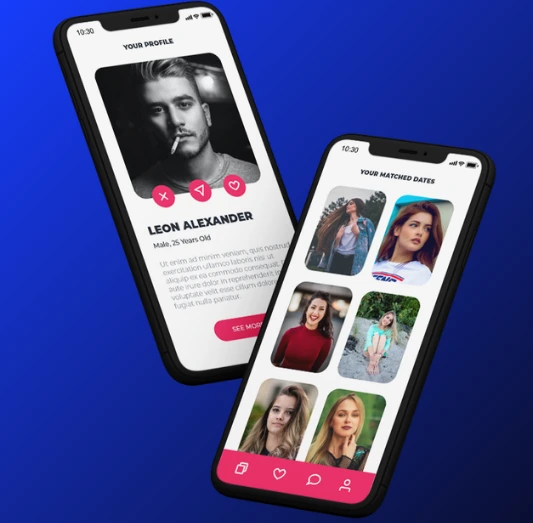
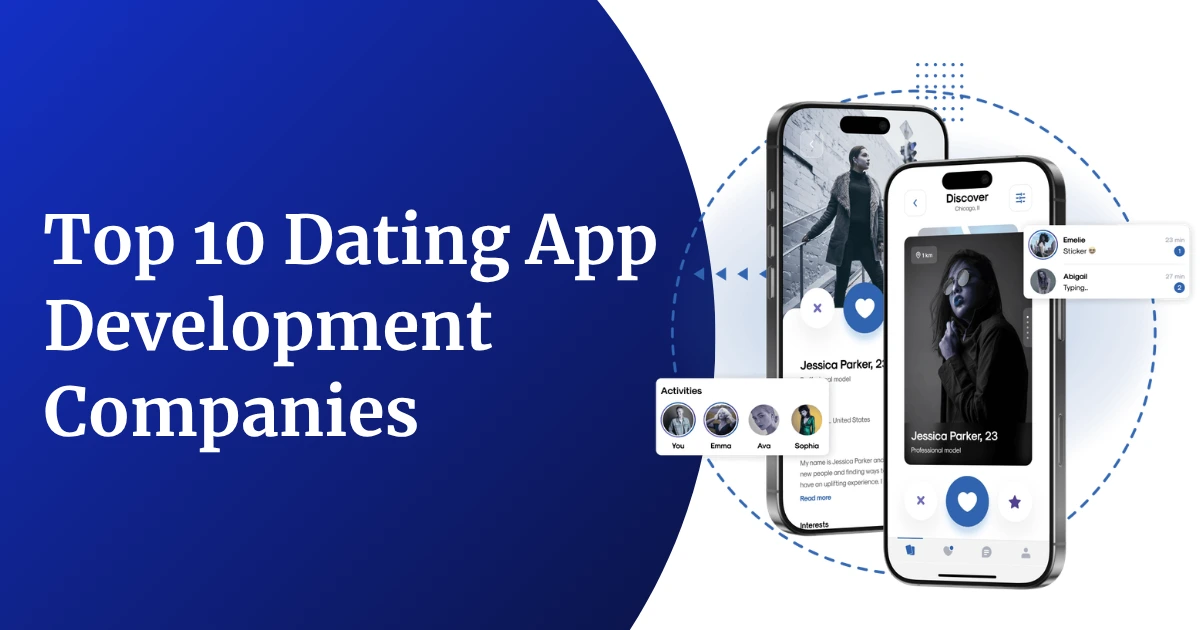
Online dating isn’t a side business anymore — it’s a full-blown industry. People swipe, chat, video call, and even get matched by AI before they ever meet in person. And because of that, the demand for a solid dating app development company has never been higher.
If you’re a founder, a startup, or even an existing dating brand thinking about building (or rebuilding) your app in 2026, you already know the hardest part isn’t the idea. It’s finding a development partner who actually understands matchmaking algorithms, real-time chat, geolocation, safety features, and monetization — not just “an app.”
The global online dating market is projected to cross $3 billion in revenue this year alone, according to market data, and that number keeps climbing every quarter. With that kind of money on the table, picking the wrong development team can cost you a lot more than a missed deadline.
And it’s not just about revenue. User expectations have shifted a lot in the last couple of years too. People don’t just want a swipe-and-match app anymore — they want AI that actually understands their preferences, video profiles they can trust, safety tools that work, and an app that doesn’t feel like a copy of the ten other dating apps already sitting on their phone. Meeting all of that takes real technical depth, not a weekend hackathon build.
So we did the homework for you. Below is a simple, honest list of the top 10 dating app development companies you should actually consider in 2026 — what they’re good at, who they’re built for, and what makes each one different. We’ve looked at their founding history, team size, technology stack, and the kind of projects they typically take on, so you can shortlist faster and avoid wasting weeks on discovery calls with the wrong fit.
What Exactly Is a Dating App Development Company?
Let’s keep this simple. A dating app development company is a team of developers, designers, and product experts who specialize in building apps that help people meet, chat, and connect — safely and at scale.
It’s not the same as hiring a general mobile app agency. Dating apps come with their own unique headaches:
- Matching algorithms that actually recommend the right people, not random profiles
- Real-time chat and video calling that doesn’t lag or drop
- Geolocation to show nearby matches without draining battery or leaking user privacy
- Fraud and fake-profile detection, since dating apps are a top target for scammers
- Payment and subscription systems for premium plans, boosts, and super likes
- Content moderation for photos, messages, and reported users
A good dating app development company has already solved these problems before. They’re not learning on your budget — they’re applying lessons from apps they’ve already shipped. That’s the entire value of hiring specialists instead of a generic dev shop.
Beyond the core build, most established dating app development companies also help with things founders don’t always think about upfront:
- Onboarding flow design — the first two minutes of a dating app decide whether a user sticks around or deletes it, so this gets far more attention than in a typical app
- Push notification strategy — timed right, notifications bring users back; timed wrong, they get your app uninstalled
- App Store and Play Store compliance — dating apps face stricter review guidelines than most categories, especially around user-generated content and age verification
- Analytics and retention tracking — knowing where users drop off (browsing, chatting, or after the first date) is what separates a growing app from a stagnant one
It’s also worth pointing out that dating apps share a lot of DNA with other consumer-facing social products. If you’re comparing your options, it can help to also look at how social media app development companies approach engagement, feeds, and real-time features — a lot of that thinking carries directly into dating app design.
Top Dating App Development Companies: Quick Comparison
Before we go deep into each company, here’s a quick side-by-side view so you can shortlist faster.
| Rank | Company | Founded | Headquarters | Projects Delivered | Core Specialty |
| 1 | GrowRankers | 2024 | Jaipur, Rajasthan, India | 150+ software products | AI-powered matchmaking apps, MVP to enterprise scale |
| 2 | Apptunix | 2013 | Chandigarh, India | 500+ apps | Feature-rich dating & social apps |
| 3 | Dev Technosys | 2013 | Jaipur, Rajasthan, India | 3000+ projects | Custom dating platforms, on-demand apps |
| 4 | Appinventiv | 2015 | Noida, India | 3000+ projects | AI/ML-driven mobile products |
| 5 | JPLoft | 2015 | Jaipur, Rajasthan, India | 500+ apps | Startup-focused dating MVPs |
| 6 | Hyperlink InfoSystem | 2011 | Ahmedabad, Gujarat, India | 4600+ apps | Large-scale mobile app engineering |
| 7 | TechAhead | 2009 | Los Angeles, California, USA | 2500+ apps | Enterprise mobility & AI apps |
| 8 | Cleveroad | 2011 | Tallinn, Estonia | 800+ projects | European-market web & mobile apps |
| 9 | MindInventory | 2011 | Ahmedabad, Gujarat, India | 1500+ apps | UI/UX-focused product design |
| 10 | Fueled | 2008 | New York City, USA | 500+ apps | Premium design-led mobile apps |
Keep in mind that “best” always depends on your budget, your timeline, and how complex your feature list is. A five-person startup and a funded dating brand with 50,000 users need very different kinds of partners. That’s exactly why we’re breaking each one down individually below.
Best Dating App Development Companies in 2026
Here’s the detailed list. We’ve ranked GrowRankers at the top because of how fast they’ve grown and how well their tech stack fits modern dating app requirements — but every company here is genuinely worth a look.
1. GrowRankers
Founded: 2024
Headquarters: Jaipur, Rajasthan, India
Website: growrankers.com
Projects Delivered: 150+ software products
Core Technologies: Flutter, React Native, Swift, Kotlin, Node.js, Python, AWS, Google Cloud, Firebase, TensorFlow Lite
GrowRankers is one of the newest names on this list, and honestly, that’s exactly why it deserves the top spot. Being a newer company means they’re building with 2026’s tools from day one — not retrofitting old codebases with new AI features. Their team works across Flutter and React Native for cross-platform speed, while going native with Swift and Kotlin whenever an app needs deeper hardware access, like camera-based verification or background location tracking.
What really sets GrowRankers apart is how they treat matchmaking as a data problem, not just a UI problem. They use TensorFlow Lite to run lightweight machine learning models directly on the user’s device, which means smarter match suggestions without constantly pinging the server or draining the user’s data plan. Combined with Firebase for real-time chat and notifications, and AWS or Google Cloud for backend scalability, the apps they build are genuinely ready to handle spikes in traffic — something that matters a lot once your app starts trending.
Security is another area where GrowRankers doesn’t cut corners. Dating apps deal with deeply personal information: photos, location history, private conversations. Their development process bakes in profile verification, encrypted messaging, and abuse-reporting systems from the start instead of adding them later as a patch job.
They’ve already delivered 150+ software products across different industries, and dating and social apps are a core focus area. If you want a sense of how they approach a real dating app build — from matchmaking logic to chat infrastructure — their dating app case study walks through the actual product decisions they made and why.
For startups on a tighter runway, GrowRankers is also known for MVP-first development. Instead of pushing you to build every feature on day one, they help you launch a lean, testable version of your app, gather real user feedback, and then scale the features that actually matter. That approach saves both money and time — two things every dating app founder is short on.
Their cloud setup is also worth mentioning. GrowRankers builds with both AWS and Google Cloud in their toolkit, which means they can architect around whichever pricing model or region works better for your target market, instead of locking you into a single vendor by default. For a dating app that might launch in one country and expand to three more within a year, that kind of flexibility saves a painful migration down the line.
Communication is another area past clients tend to bring up. Because the team is relatively lean compared to the bigger names on this list, founders usually deal directly with senior developers instead of getting passed between account managers and juniors — something that matters a lot when you’re making fast decisions during an active build.
2. Apptunix
Founded: 2013 Headquarters: Chandigarh, India Website: apptunix.com Projects Delivered: 500+ apps Core Technologies: React Native, Flutter, Swift, Kotlin, Node.js, AWS, Firebase
Apptunix has been building dating and social apps for over a decade now, and it shows in how confidently they handle complex feature sets. They’re particularly strong with AI-based matchmaking engines and have shipped apps supporting swipe-based discovery, video dating, and location-based matching.
Their team leans heavily on React Native and Flutter for cross-platform builds, which keeps development costs reasonable for startups that don’t want to maintain two completely separate codebases. If your dating app idea leans toward a niche community — think faith-based matching, professional networking-meets-dating, or age-specific platforms — Apptunix has relevant portfolio experience to point to.
They also run an in-house UI/UX team rather than outsourcing design, which tends to keep the overall product feel more consistent from wireframe to final build. Founders who’ve worked with them often mention their discovery-call process is thorough — they push you to define your matching logic and monetization plan clearly before writing a single line of code, which can feel slow at first but usually saves rework later.
3. Dev Technosys
Founded: 2013
Headquarters: Jaipur, Rajasthan, India
Website: devtechnosys.com
Projects Delivered: 3000+ projects
Core Technologies: React Native, Flutter, Node.js, PHP, Swift, Kotlin, AWS
Dev Technosys is one of the more prolific names in this space, with thousands of projects across mobile and web development. Their dating app portfolio covers everything from simple MVP builds to fully-featured platforms with subscription tiers and in-app purchases.
One thing worth noting: Dev Technosys tends to work well with businesses that already have a clear roadmap and want a large team that can move fast across multiple modules at once — chat, payments, admin panel, and moderation tools — all in parallel rather than sequentially.
Because they’re based in Jaipur, their pricing is generally competitive against Western agencies while still offering a fairly large bench of developers to pull from. That combination makes them a common pick for businesses that need to scale their development team quickly mid-project, say after a funding round changes the original scope.
4. Appinventiv
Founded: 2015
Headquarters: Noida, India
Website: appinventiv.com
Projects Delivered: 3000+ projects
Core Technologies: React Native, Flutter, Swift, Kotlin, Node.js, Python, AWS, AI/ML
Appinventiv has built a name for itself in AI and machine learning-driven mobile products, and dating apps are a natural fit for that expertise. Their matchmaking algorithms go beyond basic filters, using behavioral data to improve suggestions over time.
They typically work with mid-to-large budgets and are a solid pick if your dating app needs heavy backend intelligence — think compatibility scoring, fraud detection models, or predictive engagement features that keep users coming back daily.
Appinventiv also has a dedicated data science division, which is somewhat rare among the companies on this list. If your long-term plan involves training custom recommendation models on your own user data rather than relying on off-the-shelf matching logic, this is one of the few teams here set up to handle that properly from day one.
5. JPLoft
Founded: 2015
Headquarters: Jaipur, Rajasthan, India
Website: jploft.com
Projects Delivered: 500+ apps
Core Technologies: Flutter, React Native, Node.js, Swift, Kotlin, AWS
JPLoft is a good middle-ground option — experienced enough to handle real product complexity, but still startup-friendly on pricing and communication. They’ve built dating apps with swipe mechanics, live streaming integrations, and geo-fenced matching for local dating communities.
If you’re a first-time founder who wants a team that will actually explain technical decisions in plain English instead of jargon, JPLoft’s client-facing process tends to get good feedback for exactly that reason.
Their project structure usually involves weekly sprint reviews, which gives founders regular visibility into progress instead of waiting weeks for a big reveal. For someone building their very first app, that kind of steady check-in rhythm can make the whole process feel a lot less intimidating.
6. Hyperlink InfoSystem
Founded: 2011
Headquarters: Ahmedabad, Gujarat, India
Website: hyperlinkinfosystem.com
Projects Delivered: 4600+ apps
Core Technologies: Flutter, React Native, Swift, Kotlin, Node.js, PHP, AWS
With one of the largest project counts on this list, Hyperlink InfoSystem has essentially seen every kind of dating app request there is. Their scale means they can staff bigger teams quickly, which is useful if you’re racing to hit a launch date or need to build multiple platform versions (iOS, Android, web) at the same time.
According to industry data, iOS still drives the large majority of dating app revenue, so if your budget forces you to prioritize one platform first, that’s a detail worth discussing with any team you shortlist — Hyperlink included.
The trade-off with a bigger agency like this is that you’re less likely to work directly with the most senior engineers unless you specifically ask for it during contracting. It’s worth clarifying team structure and who your actual point of contact will be before signing anything, especially if you’re used to smaller, tighter-knit teams.
7. TechAhead
Founded: 2009
Headquarters: Los Angeles, California, USA
Website: techaheadcorp.com
Projects Delivered: 2500+ apps
Core Technologies: Swift, Kotlin, Flutter, React Native, Node.js, AWS, AI/ML
TechAhead brings a US-based presence combined with enterprise-grade engineering, which matters if you need a partner who understands American data privacy expectations and time-zone-friendly communication. They’ve worked on apps requiring heavy AI personalization and have experience integrating third-party verification and safety APIs.
They tend to be priced higher than most Indian agencies on this list, so they’re a better fit for funded startups or established brands rather than bootstrapped founders testing an idea.
TechAhead also does a fair amount of work in the health and wellness app space, and some of that experience — particularly around sensitive personal data handling and compliance — carries over well into dating app development, where user trust and data protection are just as critical.
8. Cleveroad
Founded: 2011
Headquarters: Tallinn, Estonia
Website: cleveroad.com
Projects Delivered: 800+ projects
Core Technologies: React Native, Flutter, Swift, Kotlin, Node.js, .NET, AWS
Cleveroad is a strong pick if you’re targeting the European market specifically, since they understand GDPR requirements and European user expectations around data privacy — both critical for any dating app handling location and personal data. Their engineering team is comfortable with both mobile-native builds and web-based dating platforms.
They’re also known for clear, structured project documentation, which some founders appreciate when they need to hand off a project to an internal team later.
If you’re planning to eventually bring development in-house after launch, Cleveroad’s habit of documenting architecture decisions and code thoroughly makes that transition noticeably smoother than working with agencies that treat documentation as an afterthought.
9. MindInventory
Founded: 2011
Headquarters: Ahmedabad, Gujarat, India
Website: mindinventory.com
Projects Delivered: 1500+ apps
Core Technologies: Flutter, React Native, Swift, Kotlin, Node.js, AWS, Firebase
MindInventory leans heavily into design quality, which is a bigger deal than people realize for dating apps. First impressions form in seconds on a dating app — clunky onboarding or an ugly profile screen can tank your retention before users even get to the matching part.
If a polished, modern UI is your top priority (alongside solid backend engineering), MindInventory’s design-first approach is worth a closer look.
They also offer a dedicated UX audit service, which is useful even if you’re not starting from scratch. If you already have a dating app that’s struggling with retention, having a team review your existing onboarding and matching flow before you commit to a full rebuild can save a lot of wasted development spend.
10. Fueled
Founded: 2008
Headquarters: New York City, USA
Website: fueled.com
Projects Delivered: 500+ apps
Core Technologies: Swift, Kotlin, React Native, Node.js, AWS
Fueled is a premium, design-heavy agency that’s worked with well-known consumer brands. They’re not the cheapest option on this list by any measure, but if your dating app is meant to feel like a luxury or lifestyle brand rather than a mass-market swipe app, their design sensibility can genuinely be the differentiator.
They’re best suited to funded startups that already have brand identity work done and want a technical partner who can match that polish in the product itself.
Fueled’s project timelines also tend to run leaner than expected for a design-focused agency, since a lot of their process is built around rapid prototyping before full development starts. That upfront prototyping phase can be a good way to pressure-test your app concept with real users before committing your full development budget.
Key Features Every Dating App Needs in 2026
Whichever company you go with, make sure your development scope includes these — they’re no longer “nice to have,” they’re expected by users.
AI-powered matchmaking. Basic filters (age, distance, interests) aren’t enough anymore. Users expect the app to actually learn what they like based on who they swipe, message, and match with.
Video-first profiles and calling. Photo-only profiles feel outdated. Short video intros build trust faster and cut down on fake accounts, and in-app video calling lets people vet a match before agreeing to meet in person.
Verified profiles. Selfie verification, ID checks, or liveness detection have become standard across major platforms. It’s one of the fastest ways to cut down on catfishing and bots.
Smart safety tools. Panic buttons, location-sharing with trusted contacts during dates, block-and-report flows, and AI-based message screening for harassment are now baseline expectations, not premium add-ons.
Flexible monetization. Subscriptions, boosts, super likes, and read receipts are still the main revenue drivers, but more apps are experimenting with pay-per-feature models instead of one flat premium tier.
Niche targeting. General swipe apps are a crowded, expensive market to compete in. A lot of 2026’s growth is coming from niche apps — for specific religions, hobbies, professions, or age groups — where a development partner who understands your audience really matters.
Icebreaker and conversation prompts. A blank chat box is intimidating. Apps that suggest prompts, shared-interest conversation starters, or even AI-generated opening lines see noticeably higher message-to-match conversion rates than apps that leave users to figure it out on their own.
In-app date planning. A growing number of apps now let matched users pick a nearby restaurant, café, or event directly inside the chat rather than sending them out to a separate maps app. It’s a small feature, but it keeps users inside your product longer and adds a natural point for local business partnerships down the line.
Multi-language and localization support. If you’re planning to expand beyond your home market at any point, building localization into the app architecture early is far cheaper than retrofitting it after launch. Even simple things like right-to-left text support or region-specific date formats can turn into a bigger rebuild than expected if they’re bolted on later.
Offline-friendly performance. Not every user has a stable connection at all times. Apps that gracefully handle spotty networks — caching recent matches and messages instead of showing a blank error screen — tend to hold onto users better in regions where connectivity isn’t always reliable.
How to Choose the Right Dating App Development Company
Don’t just pick the agency with the flashiest portfolio. Here’s what actually matters when you’re comparing options.
Ask to see dating-specific work, not just any mobile app. A company that’s built ten e-commerce apps and one dating app isn’t automatically a dating app expert. Look for teams that understand matching logic, chat scalability, and moderation — not just general CRUD apps.
Check their approach to security and privacy from the start. Ask directly: how do you handle user data, encrypted messaging, and profile verification? If they can’t answer clearly, that’s a red flag.
Understand their pricing model. Fixed price, time-and-materials, or dedicated team — each has trade-offs. Fixed price works for well-defined MVPs; dedicated teams work better if your feature list will keep evolving after launch.
Look at their post-launch support. A dating app isn’t “done” at launch — it needs constant iteration based on user behavior, bug fixes, and scaling as your user base grows. Make sure ongoing support is part of the conversation, not an afterthought.
Compare their tech stack against your growth plans. Cross-platform frameworks like Flutter and React Native are great for speed and budget, but if you’re planning features that need deep native integration (like advanced camera-based verification), ask how they’ll handle that.
If your dating app is also going to lean on strong social features — feeds, stories, groups, or communities — it’s worth reviewing dedicated social app development services as well, since the underlying engineering for real-time social interaction overlaps heavily with what a modern dating app needs.
Ask about their QA process. Bugs in a dating app aren’t just annoying, they’re trust-breaking. A failed payment, a message that doesn’t send, or a match notification that never arrives can push a user to delete your app permanently. Ask specifically how a company tests for these scenarios before launch, not just whether they “do testing.”
Get references from real clients, not just case studies. Case studies are curated by design. A quick call with a past client — even a fifteen-minute one — usually tells you more about how a company handles delays, scope changes, and communication under pressure than any portfolio page ever will.
Don’t ignore team stability. Ask how long the developers who’ll actually work on your project have been with the company. High turnover on a dev team mid-project is one of the most common (and most avoidable) reasons dating app builds run over budget and past deadline.
How Much Does Dating App Development Actually Cost?
Pricing is usually the first question every founder asks, and honestly, the honest answer is “it depends” — but that’s not very useful, so let’s break it down by build type.
A basic MVP with profile creation, swipe-based browsing, matching, and simple chat usually falls somewhere between $15,000 and $40,000, depending on the region of your development team and how polished the design needs to be. This is the right starting point if you’re testing a niche idea and don’t yet have proof that people want it.
A mid-tier app that adds video profiles, in-app payments, push notifications, and basic AI-based recommendations typically runs $40,000 to $80,000. Most funded startups land somewhere in this range for their first real launch.
A full-scale platform with advanced AI matchmaking, live video calling, robust safety and verification systems, and admin/moderation dashboards can easily go from $80,000 up to $150,000 or more. This tier is usually reserved for teams that have already validated demand and are scaling toward tens of thousands of users.
A few things that quietly push costs up regardless of which tier you’re in: building fully native apps instead of using a cross-platform framework, adding real-time video calling, supporting multiple languages from launch, and building custom AI models instead of using pre-trained ones. None of these are wrong choices — just make sure they’re intentional ones, not scope creep that sneaks up on you halfway through the build.
Common Mistakes Founders Make When Building a Dating App
Even with the right development partner, a lot of dating apps stumble for the same avoidable reasons. Here’s what to watch out for.
Trying to copy Tinder feature-for-feature. Matching Tinder’s exact feature list doesn’t make your app competitive — it just makes it a slower, less-funded copy of an app people already have installed. Differentiation matters more than feature parity.
Skipping safety features to save budget. Cutting corners on verification or reporting tools might save a few thousand dollars upfront, but a single bad safety incident can permanently damage trust in your app — and in this category, trust is everything.
Underestimating moderation needs. Every dating app with user-generated photos and messages needs a moderation plan, whether that’s automated AI filtering, a human review team, or both. Founders who treat this as a “later” problem often end up scrambling once the app actually has users.
Ignoring the gender balance problem. Most dating apps skew heavily toward one gender early on, which kills the experience for everyone. Smart apps plan marketing and onboarding incentives specifically to balance this from day one instead of hoping it sorts itself out.
Not planning for scale from the start. An app that works fine with 500 users can completely fall apart at 50,000 if the backend wasn’t built with scaling in mind. This is exactly why picking a development partner with real scaling experience — not just MVP experience — matters if you’re serious about growth.
Why the Dating App Market Still Makes Sense to Enter in 2026
It’s a fair question — with giants like Tinder, Bumble, and Hinge already dominating app stores, is there still room for a new dating app? The short answer is yes, but not if you’re trying to out-swipe the giants at their own game.
The real growth right now is in niche and regional platforms. Data from a recent annual report shows the overall online dating industry is still worth well over $10 billion globally and growing steadily every year, even as the big players consolidate a huge share of Western markets. That consolidation is actually good news for smaller, focused apps — users who don’t fit neatly into a mass-market app are actively looking for alternatives built specifically for them.
That’s exactly why choosing the right development partner matters so much. A generic “Tinder clone” isn’t going to cut it in 2026. You need a team that can help you find and build for a specific niche, bake in AI-driven personalization from day one, and design an experience that feels different from the five other dating apps already on your target user’s phone.
There’s also a quieter shift happening that’s worth paying attention to: users are getting more selective about which apps they trust with their personal data and photos, especially after a few high-profile data-privacy incidents across the tech industry in recent years. A dating app that can clearly communicate how it protects user data — and actually backs that up with solid engineering — has a real edge over apps that treat privacy as a footnote in their terms of service. This is another reason the development partner you choose matters just as much as the marketing budget you put behind your launch.
If you’re weighing whether now is the right time to build, a simple gut check helps: do you have a specific audience in mind that existing apps are underserving? Can you describe, in one sentence, why someone would choose your app over Tinder or Hinge? If the answer is clear, 2026 is a perfectly good year to start building. If it isn’t, it’s worth spending a few more weeks refining that answer before writing a single line of code — no development team, however good, can fix an unclear product vision.
Frequently Asked Questions
What does a dating app development company actually do?
They handle the full technical build of your app — from UI/UX design and matchmaking logic to backend infrastructure, chat systems, payment integration, and app store deployment. Good ones also help with strategy, like deciding which features actually matter for your target audience.
How much does it cost to build a dating app in 2026?
It depends heavily on features and platform choice, but a basic MVP typically starts somewhere in the 15,000–40,000 range, while a full-featured app with AI matchmaking, video calling, and advanced safety tools can run well into six figures. Get a detailed scope from at least two or three companies before deciding — pricing varies a lot between regions.
How long does it take to build a dating app?
A simple MVP can be ready in 3-4 months. A more complete app with AI-based matching, video features, and robust safety tools usually takes 6-9 months. Timelines stretch further if you’re building for both iOS and Android natively instead of using a cross-platform framework.
Which technology stack is best for dating app development?
Most modern dating apps use Flutter or React Native for the front end to save time and cost across iOS and Android, paired with Node.js or Python on the backend. For heavier AI matchmaking, frameworks like TensorFlow Lite are increasingly used to run models directly on the user’s device.
Is it still profitable to build a Tinder-style app in 2026?
Competing directly with Tinder or Bumble on their exact model is tough. But niche dating apps — built around a specific community, interest, religion, or age group — are seeing strong growth precisely because users want something more tailored than the mass-market apps offer.
What safety features should every dating app include?
At minimum: profile verification, encrypted messaging, easy block-and-report tools, and some form of AI-based content moderation to catch abusive behavior or scam patterns early. Location-sharing for in-person dates is also becoming a common trust feature.
How do I pick the best dating app development company for my project?
Look at their dating-specific portfolio, ask how they handle security and data privacy, compare pricing models, and check whether they offer post-launch support. Don’t just go with the biggest name — go with the team that best understands your specific niche and budget.
Do these companies also provide post-launch maintenance?
Most established dating app development companies, including every one listed here, offer ongoing maintenance packages covering bug fixes, server monitoring, feature updates, and scaling support as your user base grows.
Can a small startup afford a good dating app development company?
Yes. Many companies on this list, including GrowRankers, JPLoft, and Apptunix, specifically work with early-stage startups through MVP-first development — building a lean, functional version of the app first, then adding features based on real user feedback instead of guesswork.
What makes a dating app development company different from a regular app agency?
Experience with matching algorithms, chat infrastructure at scale, fraud and fake-profile detection, and safety-first design. These are specialized problems that a general-purpose app agency may not have solved before, which usually shows up in poor retention or trust issues after launch.
Should I build for iOS first, Android first, or both at once?
It depends on where your target users spend their money. iOS users generally spend more on dating app subscriptions, so many startups launch there first to validate monetization, then expand to Android once the model is proven. If budget allows, a cross-platform framework like Flutter lets you launch on both simultaneously without doubling your development cost.
Can an existing dating app be redesigned or upgraded instead of rebuilt from scratch?
Yes, and it’s often the smarter move if your app already has an active user base. Most companies on this list, including GrowRankers, offer audit-first engagements where they review your current app’s architecture and UX before recommending whether to rebuild specific modules or refactor the whole thing.
How important is AI in dating apps right now?
Very. AI now touches matchmaking accuracy, fraud detection, content moderation, and personalization across most successful dating platforms. Apps that skip AI-driven matching are increasingly at a disadvantage against competitors that use it to keep recommendations relevant and engagement high.
Picking the right development partner is honestly half the battle when you’re building a dating app in 2026. The market’s crowded, users are pickier than ever, and AI-driven personalization has quickly gone from “nice extra” to “expected feature.” Whether you go with a newer, fast-moving team like GrowRankers or one of the more established names on this list, make sure you pick a partner who’s actually built dating apps before — not just apps in general.