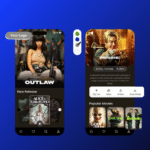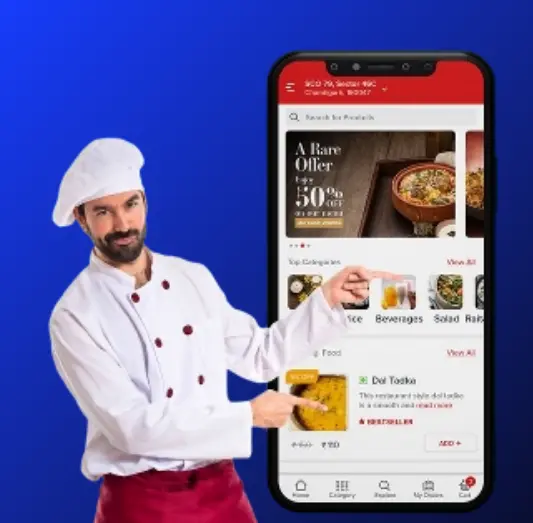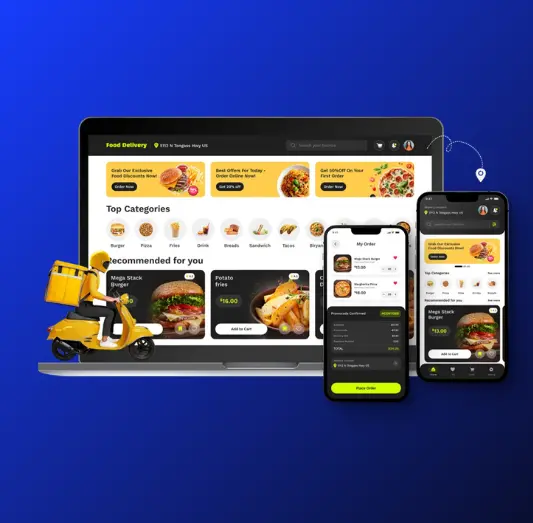
A food ordering app looks small on a phone screen, but behind that screen sits a fairly complicated machine. It has to show live menus, take payments safely, track a rider on a moving map, alert a kitchen the second an order comes in, and do all of this at the same time for thousands of hungry people during a Friday dinner rush. Pick the wrong food delivery app development company to build that machine, and you will feel it in every part of your business, from a slower launch date to a support bill that keeps climbing. This guide walks you through what actually matters when you sit across the table from a development partner, what red flags to watch for, and what a fair budget looks like in 2026, so the decision feels informed rather than rushed. Whether you run a single restaurant that wants its own ordering app or you are building a multi-restaurant marketplace from scratch, the same checks apply before you sign anything.
Why Choosing the Right Food Delivery App Development Company Matters
It is tempting to treat this like any other vendor decision, but a food delivery app is closer to hiring a co-founder for the technology side of your business than it is to buying a service off a shelf. The team you pick today will keep shaping your app long after launch day, through every update, every new city, and every busy festival weekend. Here is why that first choice carries so much weight.
The App Is the Only Conversation Most Customers Will Ever Have With You
A restaurant host can smooth over a bad night with a smile and a free dessert. An app cannot. If the checkout button is confusing, the map freezes while the rider is two streets away, or a payment silently fails without telling anyone why, the customer just closes the app and orders from someone else within seconds. There is no one to apologise on your behalf, which means the interface itself has to carry the entire relationship with the customer, and that is exactly why the build quality deserves far more attention than most first-time founders give it.
A Weak First Experience Rarely Gets a Second Chance
People form an opinion about an app within their first few taps, and that opinion is hard to undo later. Research on app behaviour shows that roughly half of new users uninstall an app within thirty days of downloading it, and food delivery apps are especially exposed here because a hungry customer is not in the mood to wait through a clunky onboarding flow or a broken address form. A development team that understands this designs the first-order journey with real care, testing every screen a new user sees before writing the rest of the app, instead of leaving it as an afterthought to be fixed after launch.
Rushed Development Almost Always Shows Up as Bugs Later
When timelines get compressed to hit an arbitrary launch date, testing is usually the first thing to get cut short, and that trade-off rarely stays invisible. A rushed build tends to surface its problems exactly when order volume is highest, during a weekend rush or a festival sale, which is the worst possible moment for a crash or a stuck payment screen. A development partner who pushes back gently on unrealistic timelines, and explains why a proper testing cycle matters, is usually protecting your launch rather than slowing it down.
The Delivery Market Is Growing Fast, Which Also Means More Competition
The global online food delivery market is expected to touch close to USD 284.73 billion in 2026 and keep growing at over 10% a year, driven by more smartphones, easier digital payments, and simply more people choosing to order in rather than cook or step out. That growth is good news if you are entering the space, but it also means the shelf is getting crowded, with new apps launching in the same delivery radius every few months. Winning a share of that market now takes more than a working ordering screen, it takes a smooth experience that genuinely gives people a reason to pick you over a brand they already trust.
A Weak Foundation Gets Expensive the Moment You Try to Scale
Most founders start lean, and that is the right call financially. The trouble shows up a year or two later, when the business is ready to expand into new cities and the original code, written for a much smaller load, starts buckling under the extra traffic. A development partner who thinks about growth from day one, even while building a small first version, saves you from a painful and expensive rebuild later, usually at the exact moment your business can least afford a pause.
Payments and Customer Data Carry Real Legal Weight
A food delivery app stores card details, home addresses, order history, and sometimes age-verification data for alcohol or restricted items. Getting any of this wrong is not just a bad app store review, it can mean regulatory fines, chargeback disputes, and a level of customer distrust that no marketing spend can fix later. That is why security has to be part of the very first conversation with a development company, not a checklist item ticked off right before launch. You can see how this plays out across different providers in this comparison of leading food delivery app development companies, which looks specifically at how each one handles payment security and data protection.
A Dependable Partner Also Protects You After Launch
Beyond the build itself, a good development partner acts like an insurance policy for your day-to-day operations. When a payment gateway changes its rules, when Apple or Google update their store policies overnight, or when a sudden order spike during a local festival puts pressure on your servers, you want a team that already knows the codebase and can react within hours instead of weeks. That kind of ongoing, dependable relationship rarely happens with a vendor who vanishes the day the app goes live, which is exactly why this decision matters well beyond the first release.
Factors to Consider When Choosing a Food Delivery App Development Company
Once the stakes are clear, the next step is knowing exactly what to look for during the actual hiring process. These are the factors that separate a partner you can build a business on from a vendor who just wants to close the deal and move on. Go through each of these during your discovery calls and ask for real proof rather than general reassurances.
1. Real, Hands-On Experience With Delivery Apps
A team that has already built ordering, dispatch, and rider-tracking systems will already know how to handle problems you have not thought of yet, like what happens when a rider cancels mid-delivery, how to react when a kitchen runs out of an item after the order is confirmed, or how to split one order across two different kitchens in a cloud-kitchen setup. Ask for real, working apps they have shipped in this exact space, not a general portfolio of e-commerce projects that simply happen to include a shopping cart. A company that can explain the specific decisions they made for a past delivery client, and why, is showing you far more than a polished case study PDF ever could.
2. A Tech Stack That Actually Fits Delivery Apps
Your developers should be comfortable with the technology that real delivery apps run on today, things like Node.js for handling many requests at once, Flutter or React Native for building both iOS and Android quickly, real-time databases for live order tracking, and cloud platforms such as AWS or Google Cloud for scaling up during rush hours. Ask them to explain their stack choice in plain words, and treat heavy jargon with a bit of suspicion if it is not backed by a simple explanation. This is worth checking the same way you would when evaluating an Android app development company, because the underlying fundamentals around code quality, testing, and release discipline stay the same whether the app delivers food, groceries, or documents.
3. Design That Removes Friction, Not Just Design That Looks Nice
Good design in a delivery app is measured in taps and seconds saved, not in how many awards it could win. Look for a partner who can show you exactly how they simplify the ordering flow, cut down the number of steps to checkout, and design the small, easy-to-forget screens, like empty states, error messages, and loading screens, carefully, because those are the moments where a user quietly decides whether to stay or delete the app. Ask to see a wireframe or working prototype from an earlier project and get them to explain the thinking behind small choices, like why the reorder button sits where it does.
4. Live Tracking and Third-Party Integrations That Actually Hold Up
Live GPS tracking, push alerts, SMS updates, payment gateways, and mapping tools all have to talk to each other smoothly, often within a fraction of a second during a busy lunch rush. Ask which specific tools a company has integrated before, such as Google Maps, Razorpay, Stripe, Twilio, or Firebase, and how they handle a moment when one of these services goes down unexpectedly. A well-prepared team will already have a backup plan for exactly this kind of situation rather than treating it as a surprise the first time it actually happens in production.
5. An Architecture Built to Scale, Not Just to Launch
Your app might start in one city with a few hundred daily orders, but the underlying architecture should already be ready for ten cities and tens of thousands of orders a day without a full rebuild. Ask how the team plans for horizontal scaling, database load balancing, and sudden traffic spikes during dinner hours, since this is usually where an experienced team clearly separates itself from a beginner team that has only ever handled a single small city. A good sign is a team that brings up caching, order-queueing systems, and database indexing on their own, without being asked.
6. Support and Maintenance After the App Goes Live
Launch day is really the starting line, not the finish line. Bugs surface once real customers start ordering, app store rules change without much notice, and a new phone operating system can quietly break a feature overnight. Confirm exactly what support is included once the app is live, response times for urgent bugs, turnaround for smaller fixes, and whether new feature work is billed separately or bundled into a monthly retainer. Get all of this written into the contract itself rather than trusted to a verbal promise made during the sales call.
7. Clear, Honest Pricing With No Hidden Layers
A trustworthy company walks you through pricing in detail instead of handing you one vague number with no breakdown behind it. Most agencies offer a few different ways of working together, and the right one for you depends on how clear your requirements already are and how much day-to-day control you want during development. The table below gives a quick sense of which engagement model tends to suit which kind of project.
| Engagement Model | Best Suited For | How the Billing Works |
| Fixed Price | A clearly locked feature list, typical for a first MVP | One agreed cost covering the full defined scope |
| Time and Material | Requirements that are still evolving or exploratory | Billed by hours or sprints actually worked |
| Dedicated Team | A long-term product needing continuous development | A monthly rate per developer, working as part of your team |
8. Independent Reviews, Not Just Website Testimonials
Testimonials on a company’s own site are a decent starting point, but independent platforms like Clutch, GoodFirms, or Google Reviews give a far more honest picture of what it is like to actually work with a team over several months. Look for patterns across many reviews rather than relying on one glowing quote. Are clients consistently happy with how quickly the team communicates and delivers, or do several unrelated reviews mention the same complaints about missed deadlines or scope creep?
9. How They Run the Project, Day to Day
You will be talking to this team regularly, sometimes daily, for several months. Ask how they actually manage a project, whether they run Agile sprints, hold weekly demo calls, or use a shared board like Jira or Trello that you can check anytime. A company that sets up clear communication from the very first discovery call is usually the same one that will proactively tell you when something goes wrong later, rather than going quiet and hoping the problem resolves itself before you notice.
10. Security and Compliance Handled Properly, Not as an Afterthought
Beyond basic encryption, ask how the team handles PCI-DSS compliance for payment data, how customer addresses and order history are stored, and whether they have worked with region-specific rules before, such as GDPR in Europe or local data-storage laws in certain Asian and Middle Eastern markets. A team that treats security seriously will usually bring this up on their own during early conversations, not just when you ask them directly.
Mistakes to Avoid When Hiring a Food Delivery App Development Partner
Even founders who do their research can fall into a few common traps while hiring. Knowing them in advance can save months of frustration and a good chunk of your budget, and this matters more than most people expect, since a large share of outsourced software projects fail to meet expectations mainly because of planning and communication gaps rather than a genuine lack of technical skill. Here are the mistakes that come up most often.
Picking the Cheapest Quote Without Asking Why It’s Cheap
The lowest bid often hides shortcuts, an outdated framework, no real testing phase, or a junior developer learning on your project instead of an experienced one guiding it. Compare the actual value in each proposal rather than the number on the invoice, and always ask what is missing from the cheapest option before treating it as a fair comparison.
Skipping a Real Reference or Portfolio Check
Polished screenshots and case study pages can be misleading, and sometimes they show a design concept that was never actually built. Ask to genuinely use a live app the company has shipped before, or better yet, speak directly to a past client about what it was actually like working with the team from kickoff through to post-launch support.
Leaving Post-Launch Support Vague
Many contracts focus entirely on the build phase and leave maintenance terms undefined. Get bug-fix response times, turnaround windows, and ongoing costs written down clearly before signing, so there are no unpleasant surprises once the app is live and actually taking real orders.
Not Talking About Scale Until It’s Too Late
If growth is never part of the early conversation, you may end up rebuilding core parts of the app right when order volume starts climbing, which tends to be the worst possible moment for downtime, since that is exactly when customers are watching closely and rivals are ready to pick up anyone you drop.
Underrating How Well You Actually Communicate With the Team
A technically strong team that responds slowly or explains things unclearly will still cost you time and stress even if the code itself is excellent. Communication style matters just as much as coding skill when you are going to work closely together for months at a stretch.
Not Locking Down Code Ownership in Writing
Always confirm, in writing, that you own the final source code, design files, and app store accounts once the project is delivered and paid for. Without this on paper, switching to a different partner later can mean starting the entire build over from zero.
Trusting Only the Reviews on the Company’s Own Website
Cross-check every claim on independent platforms instead of relying on curated testimonials picked for a landing page. A company that only shows hand-picked reviews on its own site, with no presence anywhere independent, may quietly be avoiding a fuller and less flattering picture.
Rushing Past the Discovery and Planning Phase
Jumping straight into design without a proper discovery phase usually leads to expensive rework later. A good partner insists on understanding your business model, target cities, and revenue plan before drawing a single wireframe, even if it adds a couple of weeks to the timeline upfront.
Signing Off on Vague, One-Line Scope Documents
A scope document that says little more than “build a food delivery app” leaves too much room for interpretation on both sides. Push for a detailed feature list, screen-by-screen if possible, before development starts, so both you and the development team are working from the same picture of what a finished product actually looks like.
Cost of Hiring Food Delivery App Developers
Cost is usually the very first question on a founder’s mind, and it genuinely shapes everything else, from which features make it into version one to how soon you can afford to expand into a second city. Here is a quick snapshot to help you set a realistic starting budget before requesting detailed proposals from shortlisted companies. We will be covering a full, feature-by-feature cost breakdown, along with regional rate comparisons, in a dedicated guide soon, so treat this table as an early benchmark rather than a final number.
| App Type | Estimated Cost (USD) | Approximate Timeline |
| Basic MVP (single city, core ordering only) | $15,000 – $30,000 | 8 – 12 weeks |
| Mid-Level App (multi-city, live tracking, payments) | $30,000 – $60,000 | 3 – 5 months |
| Enterprise-Grade App (AI recommendations, multi-vendor, analytics) | $60,000 – $1,50,000+ | 6 – 9 months |
Also Read this – https://growrankers.com/blog/food-delivery-app-development-cost/
What’s Next: Which Is the Best Choice?
There is no single company that is right for everyone. The best choice depends on your budget, timeline, target market, and how much guidance you need along the way, so avoid chasing the flashiest website or the lowest quote alone.
Shortlist two or three companies, ask the questions covered in this guide, and compare their answers side by side. The partner worth signing usually stands out on their own once you hear how clearly and honestly they explain their process.
Checklist While Shortlisting a Food Delivery App Development Company
Use this checklist as a practical filter while speaking with potential partners. Each category covers a different angle worth checking, and going through all four in order will give you a far clearer picture than relying on a gut feeling alone.
Portfolio and Experience Checks
Confirm these before moving forward:
- Have they built at least one live, working food or grocery delivery app, not just a concept or a mockup?
- Can they share real app store links with a genuine download and review history, not just design files?
- Do they understand three-sided marketplaces, where customer, restaurant, and rider apps work together?
- Have they worked with businesses close to your size, city count, and expected order volume?
Technical and Security Checks
Verify their technical readiness:
- Do they build on modern, well-supported frameworks rather than tools that are already fading out?
- Can they clearly explain their approach to data encryption and secure payment handling?
- Do they follow current app store guidelines for both iOS and Android from the first submission?
- Is the architecture explicitly designed to scale past your launch city without a rebuild?
Commercial and Legal Checks
Get clarity on these before signing anything:
- Is the pricing model- fixed, hourly, or dedicated team, explained with a full, itemised breakdown?
- Does the contract clearly confirm that you own the final source code and all intellectual property?
- Are payment milestones tied to actual, verifiable deliverables rather than just time passed?
- Is a written non-disclosure agreement in place before any deeper business discussions begin?
Communication and Support Checks
Look for these signs of a reliable working relationship:
- Do they offer one dedicated point of contact or project manager for the whole engagement?
- How quickly and thoroughly did they respond to your very first inquiry email or call?
- What exactly does their post-launch support package cover, and for how many months?
- Do they share regular progress updates, live demos, or structured sprint reviews through the build?
Why Choose GrowRankers as Your Food Delivery App Development Partner
GrowRankers builds food delivery app development solutions with the customer, restaurant, and rider experience designed together from day one, rather than bolted on separately after the main app is already finished. From live order tracking and secure multi-gateway payments to a cloud architecture that is ready for multi-city growth, every build is planned around your long-term roadmap, not just the version-one launch that gets you into the app stores. This approach means fewer surprises later and a codebase that is genuinely ready for the next city, the next feature request, and the next surge in daily orders.
What sets the team apart is honest communication throughout the project, itemised pricing, timelines that account for real-world delays, and a single point of contact who keeps you updated at every sprint instead of disappearing between milestones. Paired with dependable post-launch support and a genuine willingness to explain technical trade-offs in plain language, GrowRankers aims to be the kind of long-term technology partner that grows alongside your delivery business for years, not one that hands over the keys and disappears the moment the invoice clears.
Conclusion
Choosing a food delivery app development company is one of the most consequential calls you will make as a founder in this space, because the app itself becomes the product your customers interact with every single day. Take the time to weigh experience, technical depth, pricing clarity, and post-launch support before signing anything, and do not be afraid to ask uncomfortable questions early rather than finding the answers out the hard way after launch. A little extra diligence now saves you from costly rebuilds, delayed launches, and frustrated customers later, and sets your delivery business up to grow with real confidence as demand rises.
Frequently Asked Questions
How much does it cost to build a food delivery app in 2026?
Costs typically range from around $15,000 for a basic single-city MVP with core ordering features to well over $150,000 for an enterprise-grade app with AI recommendations, multi-vendor support, and advanced analytics. The final number depends heavily on your feature list, target platforms, and the region where your development team is based.
How long does it take to build a food delivery app?
A basic MVP usually takes 8 to 12 weeks to build and launch, while a mid-level app with live tracking, multiple payment gateways, and separate restaurant and rider dashboards can take 3 to 5 months. Enterprise-grade builds with features like AI recommendations typically take 6 to 9 months from discovery to launch.
Should I build native apps or go cross-platform first?
Most startups begin with a cross-platform framework like Flutter or React Native so they can launch on both iOS and Android from a single shared codebase, which also keeps early costs lower. Many move to fully native development later, once user numbers and revenue justify the extra investment in platform-specific performance.
What features are essential for the first version of a food delivery app?
The essentials include user registration and login, restaurant listings with search and filters, a working cart and checkout flow, live order tracking, multiple payment options, push notifications, and separate dashboards for restaurants and riders. Everything beyond this can usually wait for a later release once you have real user feedback.
Do I really need three separate apps for customers, restaurants, and riders?
In almost every case, yes. Each user type has a very different workflow, so a customer-facing app, a restaurant management dashboard, and a rider app are typically built as three connected but distinct experiences that share the same backend and order database.
How do I know if a development company actually has food delivery experience?
Ask for live app store links to apps they have genuinely built in this category, request to speak directly with a past client, and ask specific, scenario-based questions about how they have handled situations like order cancellations, rider reassignment, or a restaurant going offline mid-shift.
What is the real difference between fixed price and dedicated team hiring?
A fixed price model works best when your feature list is already locked in and unlikely to change, while a dedicated team model suits founders who expect requirements to evolve over time and want flexible, ongoing development capacity that can grow with the business.
Will I own the source code once the app is built?
You should, but only if it is clearly stated in your contract before work begins. Always confirm in writing that full source code, design files, and app store developer account ownership transfer to you upon final payment, with no ambiguity left for later.
What ongoing costs should I plan for after the app goes live?
Beyond hosting and server costs, you should budget for regular maintenance, bug fixes, operating system compatibility updates, and periodic feature additions as your business grows. Most established agencies offer monthly support packages that bundle these services into one predictable, recurring cost.
Should I hire a local agency or an offshore development team?
Both can work well depending on your priorities. Offshore teams often offer more competitive rates for comparable skill levels, while local agencies may offer easier time-zone alignment and in-person meetings. What matters most either way is verified experience, clear communication, and well-documented contracts, regardless of physical location.