Building a mobile app today means making one of the most important decisions a business can face: which technology to choose and how much budget to set aside. Flutter, Google’s open-source UI toolkit, has quickly become one of the most popular frameworks for cross-platform app development. But the question on every founder’s and product manager’s mind remains the same: how much does it cost to build a Flutter app in 2026?
The honest answer is that Flutter app development costs can range anywhere from $10,000 to over $300,000 depending on your app’s complexity, the team you hire, and the features you want to deliver. That is a wide range, but this guide will help you understand every variable behind those numbers so you can plan your budget with confidence.
In this comprehensive guide, we will walk you through why Flutter is worth your investment, what drives the cost of Flutter development, real-world examples with cost breakdowns, and how GrowRankers can help you build a world-class Flutter app without overspending.
Why Should You Choose Flutter for App Development in 2026?
Before diving into costs, it helps to understand why Flutter has emerged as a dominant force in mobile development. Flutter enables developers to write a single codebase and deploy it across iOS, Android, web, and even desktop platforms. This cross-platform capability alone can significantly reduce your overall development expenditure compared to building native apps separately for each platform.
Here are the key reasons why businesses and startups are choosing Flutter in 2026:
Single Codebase for Multiple Platforms
With Flutter, your development team writes code once and deploys it everywhere. This eliminates the need to hire separate iOS and Android teams, effectively cutting your engineering labor costs by up to 40 to 50 percent compared to a fully native approach.
Faster Time to Market
Flutter’s hot reload feature lets developers see changes in real time without restarting the app. This dramatically speeds up the development cycle, which means lower billable hours and a faster launch timeline for your product.
Expressive and Flexible UI
Flutter does not rely on native UI components. Instead, it draws its own widgets using the Skia and Impeller rendering engines, giving your app a consistent, polished look across every device and screen size.
Strong Community and Ecosystem
Google actively maintains Flutter, and it has one of the fastest-growing developer communities in the world. The pub.dev package repository contains thousands of ready-to-use plugins that can shorten development time for common features like authentication, payments, and analytics.
Flutter vs. Other Cross-Platform Frameworks in 2026
To put Flutter’s value proposition into perspective, here is a quick comparison with other popular frameworks:
| Framework | Language | Platforms Supported | Avg. Dev Cost (Medium App) | Performance |
| Flutter | Dart | iOS, Android, Web, Desktop | $30,000 – $120,000 | High |
| React Native | JavaScript | iOS, Android, Web | $35,000 – $130,000 | Medium-High |
| Xamarin | C# | iOS, Android | $40,000 – $150,000 | Medium |
| Ionic | HTML/CSS/JS | iOS, Android, Web | $20,000 – $80,000 | Medium |
| Native (iOS + Android) | Swift / Kotlin | iOS, Android | $80,000 – $300,000+ | Very High |
Flutter stands out as one of the most cost-effective choices with near-native performance, making it the top recommendation for businesses looking to maximize ROI on their mobile investment.
What Is the Cost of Flutter App Development in 2026?
Flutter app development costs are not fixed. They depend on a wide range of factors that we will examine in detail throughout this guide. However, to give you a useful starting point, here is a breakdown of typical cost ranges by app complexity:
| App Complexity | Features Included | Estimated Cost | Timeline |
| Simple App | Basic UI, 3–5 screens, minimal backend | $10,000 – $30,000 | 1 – 3 months |
| Medium Complexity App | 10–20 screens, user auth, REST API, basic admin panel | $30,000 – $80,000 | 3 – 6 months |
| Complex App | 20+ screens, real-time features, third-party integrations, custom backend | $80,000 – $150,000 | 6 – 12 months |
| Enterprise-Grade App | Advanced security, AI/ML features, multi-platform, scalable infra | $150,000 – $300,000+ | 12+ months |
These ranges reflect market rates for experienced Flutter development teams in 2026. The actual cost for your specific project will depend on the factors discussed in the next section.
Key Factors That Affect Flutter App Development Cost in 2026
Understanding what drives the cost of Flutter app development is essential for building a realistic budget. Below are the most significant factors that will influence how much you end up spending.
1. App Complexity and Features
The most direct driver of cost is what your app actually does. More features mean more development time, and more development time means higher cost. Features that significantly increase the budget include:
- Real-time functionality such as live chat, live tracking, or streaming
- Third-party integrations including payment gateways (Stripe, PayPal), social logins, or CRM tools
- Custom animations and advanced UI elements
- Push notifications with segmentation and targeting
- Offline mode with data synchronization
- Augmented reality or camera-based features
- Biometric authentication (fingerprint, face ID)
2. Development Team Location and Engagement Model
Where your development team is located has a massive impact on cost. Hourly rates vary considerably across regions:
| Region | Avg. Hourly Rate (Flutter Dev) | Cost for 1,000 Hours | Quality Level |
| North America (USA/Canada) | $100 – $200/hr | $100,000 – $200,000 | Very High |
| Western Europe (UK/Germany) | $80 – $150/hr | $80,000 – $150,000 | Very High |
| Eastern Europe (Ukraine/Poland) | $40 – $80/hr | $40,000 – $80,000 | High |
| India | $20 – $50/hr | $20,000 – $50,000 | High |
| Southeast Asia (Philippines/Vietnam) | $20 – $45/hr | $20,000 – $45,000 | Medium-High |
| Latin America (Brazil/Mexico) | $35 – $70/hr | $35,000 – $70,000 | High |
India-based Flutter development teams, like the one at GrowRankers, consistently deliver enterprise-grade quality at highly competitive rates, making them a preferred choice for startups and established businesses alike.
3. Team Size and Composition
A Flutter app project typically involves multiple roles beyond just the developer. Here is a standard team composition and how each role contributes to overall cost:
| Role | Responsibility | Approx. Hours (Medium App) | Estimated Cost (at $35/hr) |
| Flutter Developer (x2) | Core app development | 600 – 900 hrs | $21,000 – $31,500 |
| UI/UX Designer | Wireframes, prototypes, visual design | 150 – 250 hrs | $5,250 – $8,750 |
| Backend Developer | API, database, server logic | 200 – 350 hrs | $7,000 – $12,250 |
| QA Engineer | Testing, bug reporting, regression | 100 – 180 hrs | $3,500 – $6,300 |
| Project Manager | Planning, coordination, client communication | 80 – 120 hrs | $2,800 – $4,200 |
| DevOps Engineer | CI/CD, server setup, deployment | 40 – 80 hrs | $1,400 – $2,800 |
4. Design Complexity
A basic app with standard UI components will cost far less to design than one with custom illustrations, micro-animations, or a bespoke design system. Here is how design scope affects cost:
- Basic design (standard components, minimal customization): $2,000 – $5,000
- Mid-level design (custom icons, branded color scheme, UX flows): $5,000 – $15,000
- Premium design (custom animations, illustration, advanced prototyping): $15,000 – $40,000+
5. Backend Infrastructure and APIs
Your Flutter app is only the front end. Behind every great mobile app is a robust backend architecture that stores data, authenticates users, handles business logic, and connects to external services. Backend costs can include:
- REST API or GraphQL development
- Database design and management (PostgreSQL, MongoDB, Firebase)
- Cloud server setup (AWS, Google Cloud, Azure)
- Third-party API integrations (Google Maps, Twilio, Stripe)
- CDN and media storage
For a medium-complexity app, backend development typically accounts for 25 to 35 percent of the total project budget.
6. App Maintenance and Post-Launch Support
Building the app is only part of the investment. After launch, you will need to budget for ongoing maintenance, OS updates, bug fixes, performance monitoring, and feature additions. Industry benchmarks suggest budgeting 15 to 20 percent of the original development cost per year for maintenance.
For example, if your Flutter app cost $60,000 to build, you should budget approximately $9,000 to $12,000 per year for ongoing maintenance and updates.
7. App Store Deployment Costs
Deploying your Flutter app to the Apple App Store and Google Play Store involves additional one-time and recurring fees:
- Apple Developer Program (iOS): $99/year
- Google Play Developer Account (Android): $25 one-time fee
- App Store Optimization (ASO) setup: $500 – $2,000
Why It Is a Critical Investment Before You Build
Before a single line of code is written, professional development teams conduct a discovery phase. This is one of the most valuable investments you can make early in your project, and it can save you tens of thousands of dollars by preventing costly mistakes down the road.
The discovery phase typically takes 2 to 4 weeks and involves deep collaboration between your team and the development agency to define and document every aspect of the project.
What the Discovery Phase Includes
Business Requirements Analysis
Understanding your target audience, business goals, monetization strategy, and success metrics. This step ensures the app is built to solve real problems rather than chasing feature trends.
Technical Architecture Planning
Deciding on the tech stack, backend infrastructure, third-party services, scalability approach, and security architecture before development begins.
UX Research and Wireframing
Conducting user research, creating user journey maps, and building low-fidelity wireframes to validate the product concept before investing in high-fidelity design.
Project Scoping and Estimation
Producing a detailed scope of work, feature list, milestone plan, and accurate cost estimate. This document becomes the blueprint for the entire project.
Discovery Phase Cost and Timeline
| Activity | Duration | Estimated Cost |
| Business requirements workshop | 3 – 5 days | $1,500 – $3,000 |
| Technical architecture planning | 3 – 5 days | $1,500 – $3,000 |
| UX research and wireframing | 5 – 10 days | $2,000 – $5,000 |
| Project scoping and estimation | 3 – 5 days | $1,000 – $2,500 |
| Total Discovery Phase | 2 – 4 weeks | $6,000 – $13,500 |
Many reputable agencies, including GrowRankers, offer the discovery phase as a standalone engagement so clients can validate their project before committing to full development. This is strongly recommended for any project above $30,000 in scope.
Real-World Flutter App Examples with Cost and Timeline Breakdown
Theory is useful, but real examples make budgeting tangible. Here are four representative Flutter app projects across different industries, with approximate timelines and cost estimates based on real market rates in 2026.
[Also, read this for complete break down – https://growrankers.com/blog/how-long-does-it-take-to-build-a-flutter-app/]
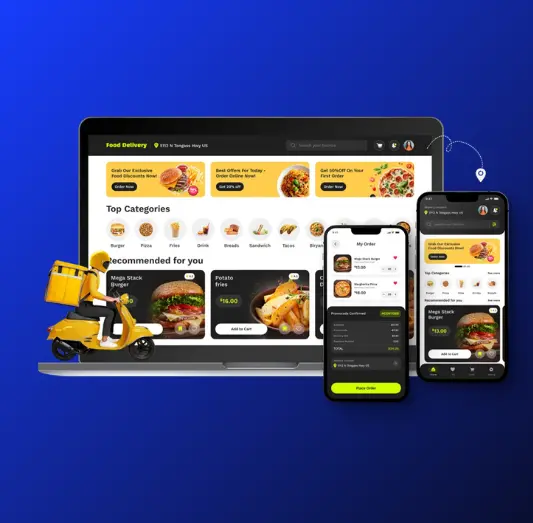
Example 1: On-Demand Food Delivery App (Medium Complexity)
Similar to a regional food delivery platform, this app would include customer and restaurant-side apps, real-time order tracking, payment integration, and a web-based admin dashboard.
| Component | Hours | Estimated Cost |
| Flutter frontend (customer + restaurant apps) | 500 hrs | $17,500 |
| Backend API and database | 300 hrs | $10,500 |
| UI/UX design | 180 hrs | $6,300 |
| Real-time tracking integration | 100 hrs | $3,500 |
| Payment gateway (Stripe) | 60 hrs | $2,100 |
| QA and testing | 120 hrs | $4,200 |
| Admin panel (web) | 160 hrs | $5,600 |
| Total | 1,420 hrs | $49,700 |
Estimated timeline: 5 – 7 months
Example 2: Healthcare Telemedicine App (High Complexity)
A HIPAA-compliant telemedicine platform with video consultation, patient records, appointment scheduling, and secure messaging.
| Component | Hours | Estimated Cost |
| Flutter frontend (patient + doctor apps) | 700 hrs | $24,500 |
| Secure backend + EHR integration | 500 hrs | $17,500 |
| Video call integration (WebRTC/Agora) | 150 hrs | $5,250 |
| UI/UX design and accessibility | 200 hrs | $7,000 |
| Compliance and security implementation | 120 hrs | $4,200 |
| QA and penetration testing | 180 hrs | $6,300 |
| Total | 1,850 hrs | $64,750 |
Estimated timeline: 7 – 10 months
Example 3: E-Commerce Mobile App (Medium Complexity)
A feature-rich shopping app with product catalog, search and filtering, cart, wishlist, payment, and push notifications.
| Component | Hours | Estimated Cost |
| Flutter frontend | 400 hrs | $14,000 |
| Backend (product catalog, orders, users) | 280 hrs | $9,800 |
| Payment integration (Stripe, PayPal) | 80 hrs | $2,800 |
| UI/UX design | 160 hrs | $5,600 |
| Push notifications + analytics | 60 hrs | $2,100 |
| QA and testing | 100 hrs | $3,500 |
| Total | 1,080 hrs | $37,800 |
Estimated timeline: 4 – 6 months
Example 4: Simple Utility or Productivity App (Low Complexity)
A straightforward productivity app such as a habit tracker, note-taking tool, or simple task manager.
| Component | Hours | Estimated Cost |
| Flutter frontend | 180 hrs | $6,300 |
| Simple backend or Firebase setup | 80 hrs | $2,800 |
| UI/UX design | 60 hrs | $2,100 |
| QA and testing | 50 hrs | $1,750 |
| Total | 370 hrs | $12,950 |
Estimated timeline: 1.5 – 3 months
How to Reduce and Optimize Your Flutter App Development Budget
Building a great app does not always require maximum spending. With the right strategy, you can deliver a high-quality Flutter app while keeping costs firmly under control. Here are proven techniques that experienced product teams use to optimize their development budget.
Start with an MVP (Minimum Viable Product)
Rather than building every feature you can imagine right away, launch with the smallest set of features that delivers value to your core users. An MVP approach reduces your initial investment by 40 to 60 percent while letting you validate your idea in the market before committing to full-scale development.
Use Pre-Built Flutter Packages from pub.dev
The Flutter ecosystem on pub.dev contains thousands of open-source packages for common functionality: authentication, state management, payments, maps, notifications, and more. Leveraging these packages can save hundreds of development hours and significantly reduce costs.
Choose an Offshore Development Partner Wisely
Hiring a reputable development team in India or Eastern Europe can reduce your labor costs by 50 to 70 percent compared to North American or Western European rates without sacrificing quality. The key is to choose a partner with strong Flutter expertise, a portfolio of delivered projects, and transparent communication processes.
Prioritize Features by Business Impact
Not all features are equal. Work with your product team to create a priority matrix that ranks features by business value and development effort. Build high-value, low-effort features first, and defer expensive, low-impact features to later releases.
Invest in the Discovery Phase
As outlined earlier, a thorough discovery phase helps you avoid scope creep, rework, and budget overruns. Teams that skip discovery often end up spending 20 to 30 percent more on the project overall due to mid-development changes and misaligned expectations.
Adopt Agile Development
Agile methodology breaks the project into two-week sprints with regular reviews and demos. This gives you full visibility into progress, allows you to reprioritize features in real time, and prevents the budget from silently ballooning in a waterfall process.
Reuse UI Components and Design Systems
A well-built shared component library means designers and developers spend less time recreating similar elements. Investing upfront in a design system pays dividends throughout the project and makes future updates faster and cheaper.
Tips for Selecting a Trustworthy Flutter Development Company in 2026
Choosing the right development partner is as important as budgeting correctly. A skilled, honest team will deliver within scope and budget. A poor choice can result in delays, cost overruns, and a substandard product. Here is what to look for when evaluating a Flutter development company.
1. Review Their Flutter-Specific Portfolio
Ask to see Flutter apps they have built and shipped to production. A company that claims Flutter expertise should be able to show you live apps on the App Store or Google Play. Look for visual quality, complexity, and relevance to your industry.
2. Assess Technical Depth
Ask prospective partners about their approach to state management (BLoC, Riverpod, Provider), their experience with Flutter’s rendering pipeline, and how they handle performance optimization on low-end Android devices. These questions quickly distinguish generalist shops from genuine Flutter specialists.
3. Check Reviews and References
Look for verified client reviews on platforms such as Clutch.co and Google. Ask for references from past clients and actually call them. A company with strong client references will happily connect you with previous customers.
4. Evaluate Communication and Project Management
Great code delivered with poor communication is a nightmare. Ask about their project management tools (Jira, Trello, Asana), communication cadence (daily standups, weekly syncs), and how they handle scope changes. Transparent, proactive communication is a non-negotiable quality in a development partner.
5. Understand Their QA and Testing Process
Quality assurance is not an afterthought. Ask how testing is integrated throughout the development cycle. A professional team will conduct unit testing, widget testing, integration testing, and user acceptance testing (UAT) before any release.
6. Assess Post-Launch Support Offerings
Building the app is only the beginning. Ensure your partner offers a clear post-launch support plan that includes bug fixes, performance monitoring, OS update compatibility, and ongoing feature development at defined rates.
7. Verify Intellectual Property Ownership
Before signing any contract, confirm that all IP rights for the code, design, and assets will be fully transferred to you upon project completion and final payment. This is standard practice but must be explicitly stated in the agreement.
How GrowRankers Can Help You Build a High-Performance Flutter App
GrowRankers is a full-service digital product and app development company with a specialized team of Flutter engineers, UI/UX designers, backend architects, and QA professionals. We have delivered Flutter apps across industries including fintech, healthcare, e-commerce, education, and logistics.
Our Flutter Development Capabilities
- Cross-platform Flutter app development for iOS, Android, and web from a single codebase
- Custom Scalable backend development with Node.js, Python, Firebase, and AWS
- Third-party API integrations, including payment gateways, maps, messaging, and analytics
- Performance optimization and app store submission support
- Comprehensive QA with automated and manual testing pipelines
- Post-launch maintenance, monitoring, and iterative feature development
Why Businesses Trust GrowRankers for Flutter Projects
At GrowRankers, we combine deep Flutter technical expertise with a transparent project management approach that keeps you informed at every step. We offer fixed-price engagements for well-defined projects and time-and-material models for evolving product roadmaps.
Our discovery-first approach ensures that every project we take on has a solid foundation before development begins. This means fewer surprises, tighter budgets, and a final product that genuinely meets your business goals.
Whether you are a startup building your first MVP or an enterprise modernizing a legacy system, GrowRankers has the experience and the team to deliver a Flutter app that performs, scales, and delights your users.
Ready to discuss your Flutter project? Contact GrowRankers today for a free consultation and a detailed project estimate tailored to your requirements.
Trusted Resources for Flutter App Development
For developers and decision-makers who want to dive deeper into Flutter’s technical capabilities, the official Flutter documentation by Google provides comprehensive guidance on architecture, widgets, performance, and deployment best practices. This is the most authoritative source for understanding what Flutter can and cannot do.
To stay current with mobile app market trends and user behavior statistics that inform product decisions, Statista’s Mobile App Market Overview provides up-to-date data on app downloads, revenue, and consumer preferences across global markets.
[Also read this https://growrankers.com/blog/how-to-choose-the-perfect-flutter-app-development-company/]
FAQs About Flutter App Development Cost in 2026
1. What is the minimum budget required to build a Flutter app in 2026?
The minimum viable budget for a basic Flutter app with simple features starts at around $10,000 to $15,000 when working with an experienced Flutter app development team. For apps with more features, payment integrations, or real-time functionality, budgets typically start at $30,000 or more.
2. Is Flutter cheaper to develop than React Native?
Both frameworks are cross-platform and have comparable development costs. Flutter may have a slight edge in certain scenarios because Dart’s compile-ahead-of-time nature reduces some performance-related rework. For most projects, the cost difference between Flutter and React Native is less than 10 to 15 percent either way, and the choice should be driven by your team’s expertise and technical requirements.
3. How long does it take to build a Flutter app?
Development timelines vary considerably by complexity. A simple app typically takes 1 to 3 months. A medium-complexity app requires 3 to 6 months. A complex enterprise application can take 9 to 12 months or longer. The discovery phase, third-party integrations, and app store review processes also add to the overall timeline.
4. Does Flutter support both iOS and Android with a single codebase?
Yes, this is one of Flutter’s core strengths. A single Flutter codebase compiles natively for both iOS and Android, as well as web and desktop platforms. However, you will still need to test thoroughly on real devices for both platforms, as there can be platform-specific behaviors in areas like navigation, notifications, and permissions.
5. What ongoing costs should I expect after my Flutter app launches?
After launch, you should budget for monthly server and cloud hosting costs ($50 to $500+ depending on traffic), annual Apple Developer Program membership ($99/year), bug fixes and patches, compatibility updates for new iOS and Android OS versions, and any new feature development. A realistic ongoing annual budget is 15 to 20 percent of your original development cost.
6. Can Flutter be used for web and desktop apps as well?
Yes. Flutter officially supports web, macOS, Windows, and Linux in addition to iOS and Android. However, web and desktop support, while production-ready, may require additional optimization work for platform-specific UX conventions. For most businesses, the primary use case is still iOS and Android, with web as a secondary target.
7. How do I get an accurate cost estimate for my Flutter app?
The most reliable way to get an accurate estimate is to engage a development partner for a discovery phase. During discovery, the team documents your complete requirements, defines the technical architecture, and produces a detailed scope of work with a bottom-up cost estimate. Ballpark estimates without a discovery phase can be off by 50 percent or more in either direction.
8. What payment model is best for hiring Flutter developers: fixed price or time and materials?
Fixed-price contracts work well for projects with clearly defined, stable requirements. Time-and-material contracts are more appropriate for evolving projects where requirements may change. A hybrid model, with a fixed price for clearly scoped milestones and a time-and-materials arrangement for exploratory phases, offers the best of both worlds.
9. Does GrowRankers offer Flutter app development services?
Yes, GrowRankers specializes in Flutter app development for businesses of all sizes. From MVP builds for startups to enterprise-scale platforms, GrowRankers offers end-to-end Flutter development services including UI/UX design, backend development, QA, and post-launch support. Contact GrowRankers to discuss your project and receive a customized estimate.
10. What makes Flutter a good choice for startup app development?
Flutter is particularly well-suited for startups because it enables faster development with a smaller team, reduces the initial capital required to build for both iOS and Android simultaneously, and has a rich ecosystem of pre-built packages that accelerate development of common features. The result is a shorter time to market and a lower upfront investment, both critical factors for early-stage businesses.
11. How important is the UI/UX design phase in Flutter app development cost?
UI/UX design is a significant cost driver and one that should never be underinvested. A well-designed app reduces user churn, improves conversion rates, and decreases support costs. For consumer-facing apps, budget at least 15 to 20 percent of total project cost for design. For enterprise apps where usability drives productivity, even 20 to 25 percent is justified.
12. Can I update my Flutter app after it launches without rebuilding it?
Yes. Flutter apps follow standard mobile update processes through the App Store and Google Play. You can release updates that add features, fix bugs, or improve performance through the standard app store submission process. For web content within the app, tools like Firebase Remote Config also allow certain updates without a full app store submission.
Final Thoughts: Planning Your Flutter App Development Budget in 2026
Building a Flutter app in 2026 is a smart investment for businesses that want to reach users on iOS and Android without doubling their development costs. The key to staying on budget is understanding what drives cost, investing in proper planning and discovery, choosing the right development partner, and launching with an MVP rather than trying to build everything at once.
To summarize the cost landscape: simple Flutter apps start around $10,000 to $30,000; medium-complexity apps fall in the $30,000 to $80,000 range; complex apps can cost $80,000 to $150,000 or more; and enterprise-grade platforms can exceed $300,000. These figures assume experienced development teams and include design, backend, QA, and project management.
GrowRankers combines the technical depth, transparent processes, and competitive pricing that growing businesses need to bring their Flutter app vision to life. Whether you are at the idea stage or ready to begin development, our team is here to help you build something remarkable.