The real estate industry has gone fully digital, and apps like Zillow, Realtor.com, and Redfin have changed the way people search for, buy, sell, and rent properties. If you are a real estate business owner, broker, or startup founder thinking about building your own property app, one of the first questions that comes to mind is simple: how long does it take to build a real estate app?
The honest answer is that there is no single fixed timeline. The development time depends on the app’s complexity, features, platform, design requirements, and the team you choose to work with. According to industry research, the global real estate app market continues to grow rapidly as more buyers and renters search for properties online before ever contacting an agent, which is one of the reasons real estate apps are seeing higher demand than ever. You can read more about the broader app market trends on Statista to understand how big this opportunity really is.
In this blog, we will break down everything you need to know about real estate app development timelines, the factors that influence development time, how to get started, the approximate cost involved, and answers to the most commonly asked questions. Whether you’re planning a simple property listing app or a feature-rich platform like Zillow or Realtor.com, this guide will help you set realistic expectations.
Understanding Real Estate App Development
Before we talk about timelines, it’s important to understand what real estate app development actually involves. A real estate app is not just a digital brochure of properties — it’s a complete platform that connects buyers, sellers, renters, agents, and property managers in one place. The development process includes everything from research and planning to design, coding, testing, and launching the app on app stores.
Real estate app development generally falls into different categories depending on the purpose of the app and the audience it serves. Let’s look at the key aspects you should know before diving into the development process.
What Is a Real Estate App?
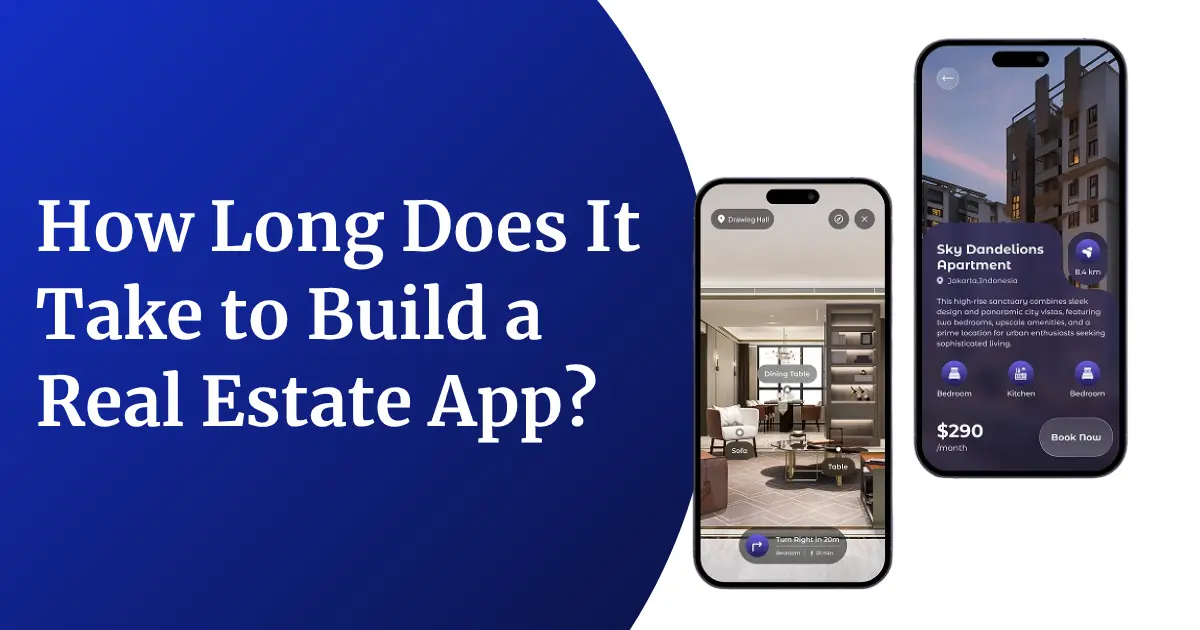
A real estate app is a mobile or web-based application that allows users to search, list, compare, and manage properties. These apps typically include features such as property listings with photos and videos, map-based search, filters for price and location, mortgage calculators, agent contact options, and sometimes virtual tours. Some apps are built for property buyers and renters, while others are designed for real estate agents, brokers, and property management companies to manage their listings, leads, and clients.
Types of Real Estate Apps You Can Build
Not every real estate app is the same, and the type of app you choose to build has a direct impact on how long it will take to develop. Here are the most common types of real estate apps businesses build today:
Property Listing and Search Apps
These apps allow users to browse properties for sale or rent. They usually include search filters, map integration, saved searches, and property comparison tools. This is the most common type of real estate app and is often the starting point for new businesses entering the market.
Real Estate Agent and Broker Apps
These apps are designed for agents and brokers to manage their listings, track leads, schedule property visits, and communicate with clients. They often include CRM-like features and dashboards.
Property Management Apps
These apps help landlords and property managers handle rent collection, maintenance requests, tenant communication, and lease management. They are usually more complex because they involve payment integrations and document management.
Real Estate Investment Apps
These apps are aimed at investors who want to analyze property values, rental yields, and ROI before making a purchase decision. They often include data analytics, charts, and financial calculators.
Rental and Short-Term Stay Apps
Similar to Airbnb-style platforms, these apps focus on short-term and long-term rentals with booking systems, calendars, and payment gateways.
If you’re unsure which type of app suits your business, it’s a good idea to first study how other companies have approached this. You can check out this detailed guide on how to build a real estate app from scratch to understand the planning process step by step.
Average Time Required for Each Type of App
Generally speaking, here is a rough idea of how long different real estate apps take to build:
A basic real estate app with simple listings, search, and contact features usually takes around 3 to 4 months to develop. A medium-complexity app that includes user accounts, map integration, filters, push notifications, and an admin panel usually takes 4 to 6 months. A more advanced platform similar to Zillow or Realtor.com, with features like AI-based recommendations, virtual tours, mortgage calculators, CRM integration, and multi-platform support, can take anywhere from 7 to 12 months or longer.
These numbers are not fixed — they depend heavily on the factors we’ll discuss in the next section.
Factors Affecting the Time to Develop a Real Estate App
The development timeline of a real estate app is influenced by multiple factors. Some of these are within your control, like the number of features you choose to include, while others depend on external elements like platform requirements and third-party integrations. Below is a table that summarizes the key factors that affect real estate app development time.
| Factor | Impact on Development Time | Description |
| App Complexity (Basic, Medium, Advanced) | High | A simple listing app takes far less time than a full-fledged platform with multiple modules and dashboards. |
| Number of Platforms (iOS, Android, Web) | High | Building for multiple platforms at once increases development time unless cross-platform frameworks like Flutter are used. |
| UI/UX Design Requirements | Medium | Custom, detailed, and animation-heavy designs take longer than templated or minimal designs. |
| Third-Party Integrations | Medium to High | Integrations like Google Maps, payment gateways, MLS data, and CRM tools add development and testing time. |
| Backend and Database Complexity | High | Apps that handle large volumes of property data, user profiles, and transactions need a robust backend, which takes more time to build and test. |
| Admin Panel and Dashboard Features | Medium | Adding admin controls for managing listings, users, and analytics adds extra development cycles. |
| Team Size and Experience | High | An experienced and larger team can complete tasks faster compared to a smaller or less experienced team. |
| Use of Frameworks (Flutter, React Native, etc.) | Medium | Cross-platform frameworks like Flutter can reduce development time significantly compared to building separate native apps. |
| Testing and Quality Assurance | Medium | Thorough testing across devices and operating systems adds time but ensures a stable, bug-free app. |
| Client Feedback and Revision Cycles | Medium to High | Frequent changes in requirements or delayed feedback from the client can extend the overall timeline. |
| Regulatory and Compliance Requirements | Low to Medium | Apps dealing with payments or sensitive user data may need additional time for compliance checks. |
| App Store Approval Process | Low | Both Apple and Google require review before publishing, which can add a few extra days to the launch timeline. |
As you can see from the table above, the choice of framework plays a big role in determining how quickly your real estate app development team can deliver the final product. Flutter, in particular, has become popular for real estate apps because it allows developers to build for both iOS and Android using a single codebase, which can cut development time significantly compared to building two separate native apps.
It’s also worth noting that the size and skill level of your development team matters a lot. A well-structured team with dedicated designers, developers, QA testers, and project managers can complete tasks in parallel, which speeds up the overall process. On the other hand, a small team handling everything sequentially will naturally take longer.
How To Get Started with Real Estate App Development
Now that you understand the factors that influence the timeline, let’s talk about how to actually begin your real estate app development journey. Getting started the right way can save you time, money, and a lot of confusion down the line.
Step 1: Define Your Goals and Target Audience
Before writing a single line of code, you need to be clear about what problem your app is solving and who it’s for. Are you targeting home buyers, renters, agents, or property managers? Knowing your audience helps you decide which features are must-haves and which ones can wait for a future update.
Step 2: Research the Market and Competitors
Spend time studying apps that are already successful in the market. Look at what they offer, what users like or dislike about them, and where there might be a gap you can fill. This research will also help you understand realistic timelines and costs based on what similar apps have achieved. For example, looking at established players can help you understand feature sets that are considered standard in the industry today.
Step 3: List Out the Core Features
Once you understand your audience and the market, create a list of features you want in your app. Try to separate these into “must-have” features for your first version (often called an MVP, or Minimum Viable Product) and “nice-to-have” features that can be added later. This approach helps reduce your initial development time significantly.
Step 4: Choose the Right Technology Stack
The technology you choose affects both the cost and the time required to build your app. Cross-platform frameworks like Flutter or React Native are popular choices for real estate apps because they allow you to launch on both iOS and Android faster than building two separate native apps. Your backend technology, database, and cloud hosting choices should also be decided at this stage based on how much data your app will handle.
Step 5: Hire the Right Development Team or Agency
This is one of the most important decisions you’ll make. You can either build an in-house team, hire freelancers, or partner with a professional app development agency. Each option has its pros and cons in terms of cost, control, and speed. If you’re located in India, it can help to look at some of the top real estate app development companies in India to compare experience, portfolios, and pricing. Similarly, if you’re based in the US or looking for a US-focused team, this list of top real estate app development companies in the USA can give you a good starting point for comparison.
Step 6: Design the UI/UX
A good real estate app needs to be visually appealing and easy to use. Since users will be browsing through many property listings, the design should make it simple to filter, compare, and view details without confusion. The design phase usually involves wireframes, mockups, and prototypes before development begins.
Step 7: Development, Testing, and Launch
Once the design is approved, the actual development begins. This is usually broken into sprints, with regular testing throughout the process rather than only at the end. After development is complete, the app goes through quality assurance testing on multiple devices before being submitted to app stores for review and final launch.
If you want professional support throughout this entire process, working with a dedicated team that understands the real estate domain can make a huge difference. You can explore real estate app development services to see how a specialized team can help bring your idea to life faster and with fewer roadblocks.
Real Estate App Development Cost
Along with timeline, cost is another major factor that businesses want to understand before starting their real estate app project. While the exact cost depends on your specific requirements, here is a general overview to help you set a budget range.
| App Type | Estimated Cost Range | Estimated Timeline |
| Basic Real Estate App (MVP) | $8,000 – $20,000 | 3 – 4 months |
| Medium Complexity App | $20,000 – $45,000 | 4 – 6 months |
| Advanced App (Zillow/Realtor.com level) | $45,000 – $100,000+ | 7 – 12 months |
These figures can vary based on the location of your development team, the technology stack used, and the number of features included. Hourly rates for developers can differ significantly between regions, which is why many businesses choose to work with development teams in countries that offer a good balance of quality and affordability.
It’s important to remember that cost and timeline are closely connected — the more features and complexity you add, the higher both the cost and the time required will be. To get a much more detailed breakdown of pricing based on features, platforms, and team locations, you can visit this in-depth guide on the cost of real estate app development like Zillow, which covers everything you need to plan your budget properly.
Why Choose GrowRankers for Your Real Estate App Development
When it comes to building a real estate app, choosing the right development partner can make all the difference between a smooth process and a stressful one. GrowRankers is known for working closely with startups and small to medium-sized businesses that want a reliable, transparent, and budget-friendly approach to app development. Unlike larger agencies that often have rigid processes and high minimum project costs, GrowRankers focuses on understanding the unique needs of growing businesses and offers flexible engagement models that fit different budgets and timelines. The team takes the time to understand your business goals, target audience, and competition before suggesting the right features and technology stack, ensuring you don’t overspend on things you don’t need in your first version.
What truly sets GrowRankers apart for startups is the combination of technical expertise and a genuine partnership approach. From the initial idea stage to designing, developing, testing, and launching your real estate app, the team stays involved at every step and keeps communication simple and transparent. They understand that startups often need to move quickly with limited resources, which is why they focus on building MVPs first, helping you validate your idea in the market before investing in advanced features. With experience across multiple real estate projects, GrowRankers brings practical insights that help startups avoid common mistakes, save development time, and launch apps that are ready to compete with established players in the market.
Frequently Asked Questions (FAQs)
1. How long does it take to build a basic real estate app?
A basic real estate app with simple property listings, search filters, and contact options usually takes around 3 to 4 months to develop, including design, development, and testing phases.
2. Can a real estate app be built faster using Flutter?
Yes, using Flutter can reduce development time because it allows developers to build for both iOS and Android using a single codebase, instead of building two separate native apps from scratch.
3. What is the fastest way to launch a real estate app?
The fastest way is to start with an MVP (Minimum Viable Product) that includes only the core features needed to test your idea in the market. You can add advanced features in later updates based on user feedback.
4. Does the number of features affect the development timeline significantly?
Yes, the number and complexity of features have one of the biggest impacts on timeline. More features mean more design work, development hours, and testing cycles.
5. How long does it take to build an app similar to Zillow or Realtor.com?
pps similar to Zillow or Realtor.com, which include advanced features like AI recommendations, virtual tours, and large databases, typically take anywhere from 7 to 12 months or longer to develop fully.
6. Is it better to hire an agency or build an in-house team for faster development?
Hiring an experienced agency is often faster because they already have a structured team of designers, developers, and testers ready to work together, whereas building an in-house team takes additional time for hiring and onboarding.
7. How much does app store approval add to the overall timeline?
App store approval usually adds a few days to a couple of weeks, depending on the platform. Apple’s App Store review process can sometimes take longer than Google’s Play Store review process.
8. Can the development timeline change after the project starts?
Yes, timelines can change if there are frequent changes in requirements, delayed feedback, or if new features are added during development. This is why it’s important to finalize your feature list before starting.
9. What is included in the typical real estate app development process?
The typical process includes market research, planning, UI/UX design, frontend and backend development, third-party integrations, testing, and final deployment to app stores. You can also refer to general guidelines from Google’s Material Design documentation for understanding best practices in app design and usability that apply across industries, including real estate.
10. Does building a web version along with a mobile app increase the timeline?
Yes, building a web version in addition to mobile apps will increase the overall timeline because it involves additional design and development work, although some of the backend infrastructure can be shared between platforms.
Final Thoughts
Building a real estate app is a significant investment of time, money, and effort, but with the right planning and the right development partner, it doesn’t have to be overwhelming. On average, most businesses can expect a timeline of anywhere between 3 to 12 months depending on the complexity of the app they want to build. The key is to start with a clear plan, prioritize your must-have features, choose the right technology stack, and work with a team that understands the real estate industry.
If you’re ready to take the next step and want a team that genuinely cares about helping startups succeed, GrowRankers is here to guide you through every stage of your real estate app development journey, from the first idea to a fully functional app in the hands of your users.