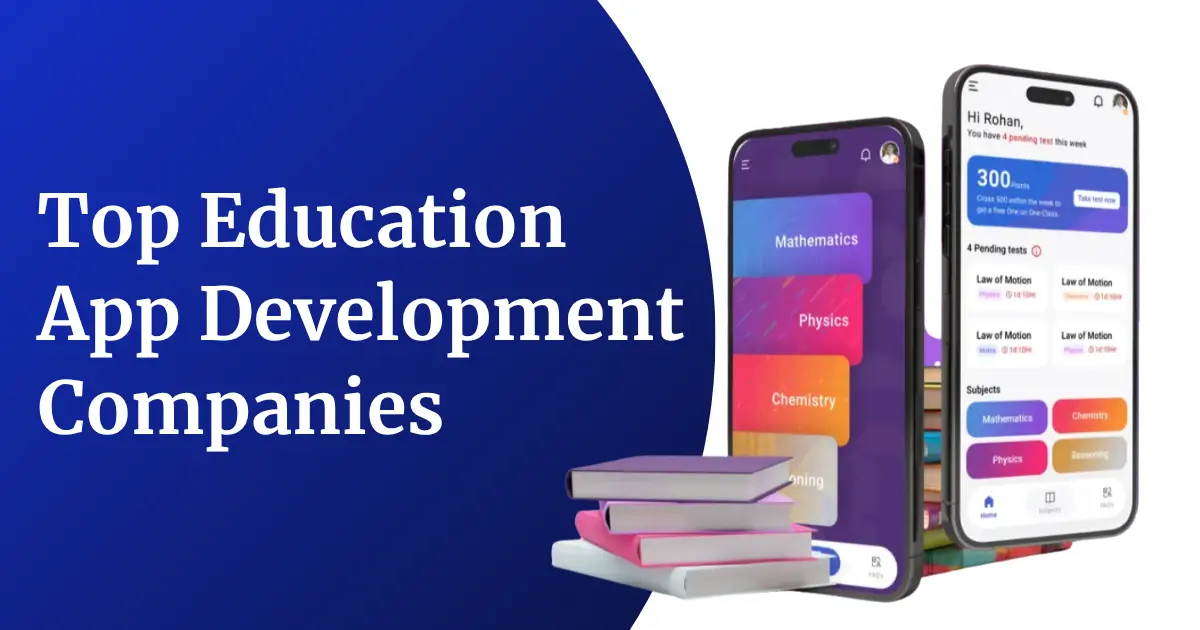
Online learning is not a side option anymore. It has become the main way millions of students, teachers, and companies teach and learn every day. If you are planning to build a learning app, an LMS, a virtual classroom, or a skill-training platform, the biggest decision you will make is not the app’s features. It is who builds it for you.
That one choice decides whether your app launches on time, works smoothly for thousands of users, and actually helps people learn — or whether it turns into a half-working product that nobody wants to use. According to a recent e-learning market report, the industry is worth around USD 275.86 billion in 2026 and is expected to grow at a 10.86% yearly rate through 2031, which tells you how crowded and competitive this space is getting. Picking the right development partner is what separates the apps that survive from the ones that quietly disappear.
Think about it from a founder’s point of view for a second. You have an idea — maybe it’s a simple app that helps kids practice math, or a full learning platform for a coaching institute with thousands of students. You know roughly what you want. But turning that idea into a real, working, reliable product needs a team that understands both software and how people actually learn. That combination is rarer than it sounds. Plenty of agencies can build “an app.” Far fewer can build a learning app that keeps students coming back day after day.
In this guide, we have gone through dozens of education app development companies and shortlisted the ones that are genuinely worth your time in 2026. We have deliberately skipped the giant, do-everything IT corporations that treat every client the same way, and focused instead on agencies that are hands-on, reasonably priced, easy to communicate with, and actually specialise in learning products rather than just listing “education” as one line item among fifty other services. Every company on this list has a real, verifiable track record you can check for yourself. Let’s get into it.
What Does an Education App Development Company Actually Do?
An education app development company is a team of designers, developers, and product experts who build digital learning tools — think mobile apps, web-based learning portals, LMS software, virtual classrooms, tutoring platforms, and skill-assessment tools. But a good one does much more than just write code.
They usually help you with:
- Turning your idea into a working plan — deciding what features actually matter for your students or employees, and which ones can wait.
- Designing an interface learners enjoy using — simple navigation, clean layouts, and screens that don’t overwhelm a 10-year-old or a working professional squeezing in a lesson during lunch.
- Building the app itself — for iOS, Android, web, or all three, using frameworks that keep things fast and stable.
- Adding smart features — AI-based recommendations, progress tracking, gamified quizzes, live classes, offline access, and payment systems for paid courses.
- Keeping data safe — student and learner data is sensitive, so a serious company will follow data protection standards and build secure login and payment flows.
- Supporting you after launch — fixing bugs, adding new features, and keeping the app updated as your user base grows.
If you already run a school, coaching institute, corporate training program, or EdTech startup and want to know more about what this process looks like in practice, our education app development services page breaks down the full journey from idea to launch.
The reason so many businesses are jumping into this space right now is simple — learners have shifted to phones and tablets, and they expect the same smooth experience they get from apps like Netflix or Instagram, just applied to studying. Companies that get this right are winning big; the ones that don’t are losing users within the first week.
It also helps to understand that “education app development company” is a fairly broad label. Some agencies focus purely on K-12 apps for schoolchildren. Others build corporate training platforms used by HR teams to onboard new employees. Some specialise in test-prep and exam simulation apps, while others build language-learning tools or skill-based marketplaces where freelance tutors connect with students. When you’re comparing companies, it genuinely helps to know which of these categories your project falls into, because a team that’s brilliant at building corporate LMS software might not be the right fit for a playful, gamified app aimed at eight-year-olds.
Why Education Apps Are Growing So Fast Right Now
A few things are happening at once that explain why this market is exploding. First, smartphones have become the primary device for learning in most households, especially outside big cities where laptops are less common. Second, schools and training companies are under pressure to show measurable results, which pushes them toward apps that can actually track and report on progress, not just deliver content. Third, and probably the biggest shift of all, artificial intelligence has made it possible to build learning apps that adjust themselves to each student — something that used to require an actual human tutor sitting next to the learner.
Put together, these shifts mean that the bar for what counts as a “good” education app has risen sharply. A basic app with a few PDF lessons and a quiz at the end simply won’t cut it anymore. Students, parents, and institutions expect interactivity, personalisation, and results — and that’s exactly why choosing the right development partner matters so much more today than it did even three or four years ago.
Top Education App Development Companies: Quick Comparison
Before we go deep into each company, here is a quick side-by-side table so you can compare them at a glance. We have picked companies that are known, reliable, and — importantly — not massive corporations that treat your project like just another number.
| Company | Founded | Headquarters | Best For |
| GrowRankers | 2024 | Jaipur, Rajasthan, India | AI-powered learning apps, LMS, EdTech startups |
| MindInventory | 2011 | Ahmedabad, Gujarat, India | Interactive learning apps with strong UI/UX |
| Simform | 2010 | Ahmedabad, Gujarat, India | Cloud-based, scalable learning platforms |
| Net Solutions | 2000 | Chandigarh, India | Enterprise-grade digital learning products |
| Bacancy Technology | 2011 | Ahmedabad, Gujarat, India | Assessment tools and student management systems |
| ValueCoders | 2004 | Gurugram, Haryana, India | Budget-friendly custom learning software |
| PixelCrayons | 2004 | Noida, Uttar Pradesh, India | Institutional and administrative EdTech tools |
| Hyperlink InfoSystem | 2011 | Ahmedabad, Gujarat, India | Mobile-first learning and tutoring apps |
| Konstant Infosolutions | 2002 | Jaipur, Rajasthan, India | K-12 and skill-based learning apps |
Pricing bands are only meant as a rough starting guide — actual project cost depends on your app’s features, platforms, and complexity. Always get a custom quote before deciding.
If you’re also exploring options outside the education niche, our roundup of the best mobile app development companies in India covers a wider range of agencies working across different industries.
Best Education App Development Companies in 2026
Now, let’s talk about each of these companies in more detail — what they do well, what kind of projects they’re suited for, and why they made this list.
1. GrowRankers — Best Overall Education App Development Company
Founded: 2024 Headquarters: Jaipur, Rajasthan, India Website: growrankers.com Projects Delivered: 150+ software products Core Technologies: Flutter, React Native, Swift, Kotlin, Node.js, Python, AWS, Google Cloud, Firebase, TensorFlow Lite
GrowRankers might be one of the newer names on this list, but don’t let the founding year fool you. In a short time, this Jaipur-based company has already shipped over 150 software products across different industries, and education happens to be one of the areas where its team really shines.
What makes GrowRankers stand out is how they approach an education app project. Instead of jumping straight into design and development, their team spends real time understanding who the app is for — a school trying to digitise attendance and homework, a coaching institute wanting to run live batches, or a startup building an AI tutor from scratch. That upfront clarity is why their apps tend to feel purpose-built rather than generic.
On the technical side, GrowRankers works across the full stack that modern learning apps need. They build native and cross-platform mobile apps using Flutter, React Native, Swift, and Kotlin, so your app runs equally well on iPhones and Android devices without you paying for two separate teams. On the backend, they rely on Node.js and Python, both known for handling heavy traffic — something that matters a lot when hundreds of students log in at the same time for a live class or an exam.
Their cloud expertise, spanning AWS, Google Cloud, and Firebase, means your learning platform can start small and scale up without a complete rebuild later. This is a common headache for EdTech founders — the app that worked fine for 500 users suddenly breaks at 50,000 users because it wasn’t built to scale. GrowRankers designs around that problem from day one.
What really separates them from the crowd, though, is their use of TensorFlow Lite for on-device AI. This lets them build features like personalised learning paths, smart content recommendations, and even offline AI-powered practice tools that work even when a student has a weak internet connection — a genuinely important feature in many parts of India and other developing regions where connectivity isn’t always reliable.
This offline-first thinking is something a lot of larger, more corporate development shops overlook, mostly because their case studies come from clients in markets with stable, high-speed internet everywhere. GrowRankers, being based in Jaipur and having worked with a wide mix of Indian and international clients, understands that a learning app aimed at real users can’t assume everyone has perfect connectivity all day long. That single design decision — building for patchy networks rather than ideal ones — quietly makes a huge difference in how many students actually stick with an app long-term instead of uninstalling it after a frustrating first week.
Another area where GrowRankers puts in real effort is UI and UX for education specifically. Building an app for a nine-year-old learning multiplication tables is a completely different design problem than building a corporate compliance training portal for working adults. Their team adjusts colour schemes, navigation patterns, font sizing, and even the pacing of animations depending on who the end user actually is, rather than applying the same generic template to every client. That attention to the “who” behind every project is part of why their apps tend to see stronger day-one and week-one retention numbers compared to more cookie-cutter builds.
GrowRankers also keeps its process transparent. Clients get regular updates, access to test builds early, and a team that’s genuinely reachable — not hidden behind layers of account managers. For startups and growing institutions that want an agile, cost-effective, and technically strong partner without the bureaucracy of a giant firm, GrowRankers is currently one of the smartest picks on this entire list. If you want to know exactly how the hiring process works with an agency like this, our guide on how to hire a developer walks through the questions you should be asking before signing any contract.
2. MindInventory
Founded: 2011 Headquarters: Ahmedabad, Gujarat, India Website: mindinventory.com Projects Delivered: 1,000+ mobile and web projects Core Technologies: Flutter, React Native, Swift, Kotlin, Node.js, AWS
MindInventory has been around long enough to have worked across nearly every industry, and education is no exception. They’re known for apps that feel polished — clean visuals, smooth animations, and interfaces that don’t confuse first-time users.
Their team is particularly good at building interactive learning tools: apps that mix video lessons, quizzes, and progress tracking into one cohesive experience. If your priority is a learning app that looks and feels premium, MindInventory is worth a conversation. They tend to work with mid-to-large EdTech companies that already have some traction and want a technically solid partner to help them scale their product further.
One thing to keep in mind — because of their scale and reputation, project timelines and costs can run a bit higher compared to smaller, more agile teams. That’s a fair trade-off if your budget allows for it and you want an experienced hand guiding the design decisions.
Their design team also spends real time on micro-interactions — small touches like how a lesson unlocks, how a progress bar fills, or how a badge animates when a student finishes a module. These details sound minor on paper, but they add up to an app that feels rewarding to use, which matters a lot for keeping younger learners engaged over weeks and months rather than just a single session.
3. Simform
Founded: 2010 Headquarters: Ahmedabad, Gujarat, India Website: simform.com Projects Delivered: 500+ software products Core Technologies: React, Node.js, AWS, Kubernetes, Python
Simform leans heavily into cloud engineering, which makes them a strong choice for education platforms that expect a lot of simultaneous users — think large-scale online exam platforms or corporate training tools used by thousands of employees across different offices.
They build with scalability baked in from the start, using tools like Kubernetes to keep systems stable even under heavy load. This matters more than people realise; nothing frustrates a student more than an app crashing right before a scheduled test.
Simform’s team also does a good job with data-heavy features — dashboards for teachers to track student performance, detailed analytics for institutions, and integrations with existing school management systems. If your education app needs to “talk” to other software you already use, their engineering depth helps a lot here.
They also tend to be a good fit for education businesses that are planning ahead rather than just solving today’s problem. If you expect your app to grow from a regional platform into a national or international one over the next couple of years, it’s worth having that conversation with Simform early, since their whole engineering approach is built around apps that need to expand smoothly rather than get rebuilt from scratch every time the user base doubles.
4. Net Solutions
Founded: 2000 Headquarters: Chandigarh, India Website: netsolutions.com Projects Delivered: 1,500+ digital products Core Technologies: React, Angular, Node.js, .NET, AWS
Net Solutions is one of the oldest names on this list, and that experience shows in how methodically they approach big, complex projects. They’re a good fit for universities, large training organisations, and enterprises that need an education platform built with strict process discipline — proper documentation, structured testing, and long-term maintenance plans.
Their team has built everything from student information systems to full learning management platforms with certification and compliance tracking built in. If your project involves multiple stakeholders, strict deadlines, and needs a company that can manage complexity without dropping the ball, Net Solutions brings that kind of steady, enterprise-level reliability.
The trade-off is that their process can feel slower and more formal compared to smaller, faster-moving teams — which works well for big institutions but might feel like overkill for a small startup just testing an idea.
Net Solutions is also a reasonable option if your project involves multiple departments internally — say, an academic team, an IT team, and an admin team, all of whom need to sign off on different parts of the app. Their structured approach to documentation and approvals tends to keep everyone aligned, which is genuinely useful when a project has more than one decision-maker involved.
5. Bacancy Technology
Founded: 2011 Headquarters: Ahmedabad, Gujarat, India Website: bacancytechnology.com Projects Delivered: 800+ projects Core Technologies: Ruby on Rails, Node.js, React Native, Flutter, AWS
Bacancy Technology has built a name for itself by being flexible with technology stacks, which is genuinely useful in education projects where requirements often shift midway. Maybe you start with a simple course-selling app and later decide you need live classes and assignment submissions — Bacancy’s team is comfortable adjusting without a major rebuild.
They’re especially strong in building assessment and evaluation tools — auto-graded quizzes, proctoring features for online exams, and student management dashboards for institutions handling large batches of learners. Coaching centres and skill-training platforms tend to find a good match here.
Their pricing sits in a comfortable middle ground, making them approachable for mid-sized EdTech businesses that want solid engineering without enterprise-level costs.
Because they work with a fairly wide range of technology stacks, Bacancy is also a reasonable choice if you already have an existing app built by another vendor and simply need someone to take over, fix issues, and continue building on top of it. Not every company is comfortable stepping into an unfamiliar codebase, but their team has enough range to handle that kind of handover without too much friction.
6. ValueCoders
Founded: 2004 Headquarters: Gurugram, Haryana, India Website: valuecoders.com Projects Delivered: 4,200+ projects Core Technologies: PHP, Laravel, React, Node.js, Flutter
ValueCoders is often the go-to option for startups and small educational businesses working with tighter budgets. They offer dedicated developer teams at a lower cost compared to many agencies on this list, without cutting corners on the basics — clean code, working features, and reasonable turnaround times.
If you’re an early-stage founder who needs an MVP (minimum viable product) to test your learning app idea before raising funding or scaling up, ValueCoders is a practical, no-frills choice. Their team has handled everything from simple flashcard-style learning apps to more involved tutoring marketplaces.
Just be clear and specific about your requirements upfront — with budget-focused agencies, well-documented requirements tend to lead to smoother outcomes.
It’s worth mentioning that “budget-friendly” doesn’t have to mean “low quality” — it usually just means a leaner team structure and fewer layers of management between you and the developers actually writing the code. For founders who are comfortable being hands-on and giving direct feedback during development, that can actually work out well, both in terms of cost and in terms of how quickly changes get made.
7. PixelCrayons
Founded: 2004 Headquarters: Noida, Uttar Pradesh, India Website: pixelcrayons.com Projects Delivered: 4,500+ projects Core Technologies: PHP, Laravel, React, Node.js, AWS
PixelCrayons works well with schools and institutions that need more than just a student-facing app — they also build the administrative backend that runs the whole operation, from fee management to timetable scheduling to teacher-parent communication tools.
If your project is less about flashy features and more about digitising the day-to-day running of an educational institution, their team has the experience to map out those workflows properly. They’ve worked with a wide mix of clients, from small training centres to larger educational networks, giving them a practical understanding of what actually gets used versus what just looks good in a pitch deck.
If your institution is still relying on spreadsheets, WhatsApp groups, and paper registers to manage its day-to-day operations, PixelCrayons is the kind of partner that can help you digitise that whole backend in one connected system, rather than just bolting a student-facing app on top of a messy internal process.
8. Hyperlink InfoSystem
Founded: 2011 Headquarters: Ahmedabad, Gujarat, India Website: hyperlinkinfosystem.com Projects Delivered: 3,500+ mobile apps Core Technologies: Flutter, React Native, Swift, Kotlin, Node.js
Hyperlink InfoSystem has built a reputation mostly around mobile app development, and their education portfolio leans heavily toward tutoring apps, language-learning tools, and gamified learning experiences aimed at younger users.
Their strength is in building engaging, mobile-first products — the kind of app a student would actually want to open every day, with streaks, badges, and interactive lessons that don’t feel like homework. If your app’s success depends on daily user engagement rather than just functionality, this is an area where their team has real, repeated experience.
Since most of their portfolio revolves around iOS and Android, businesses that specifically want deep expertise in Apple’s ecosystem might also want to check our detailed list of iOS app development companies in India for more platform-specific options.
Hyperlink InfoSystem also tends to move quickly on smaller, feature-focused builds. If you already have a working app and just want to add one specific engagement feature — a leaderboard, a streak system, or a referral programme — their team can usually turn that around without needing a full redevelopment cycle.
9. Konstant Infosolutions
Founded: 2002 Headquarters: Jaipur, Rajasthan, India Website: konstantinfo.com Projects Delivered: 2,000+ projects Core Technologies: PHP, Laravel, React Native, Node.js, AWS
Konstant Infosolutions is another Jaipur-based company with a long track record, particularly in K-12 education apps and skill-based learning platforms. They tend to work with smaller institutions and regional EdTech businesses that want dependable, no-nonsense development without a huge price tag.
Their team has experience building apps for younger learners — simplified interfaces, parental controls, and progress reports that parents can easily understand. If your target audience is school-going children rather than adults or professionals, their portfolio reflects that kind of age-appropriate design thinking.
They also tend to be a comfortable choice for regional coaching centres and tuition businesses that are digitising for the first time. Their team is used to explaining technical decisions in plain language to clients who aren’t necessarily software experts themselves, which can make the whole process feel a lot less intimidating if this is your first time building an app.
How to Choose the Right Education App Development Partner
Picking from a list like this one is only half the job. Here’s what actually matters once you start having conversations with these companies:
Look at their education-specific work, not just their overall portfolio. A company might be great at building e-commerce apps but still be new to the specific challenges of learning apps — things like tracking progress accurately, handling live classes without lag, or designing quizzes that actually test understanding rather than just memory.
Ask about post-launch support. An education app is never really “done.” You’ll need updates, bug fixes, and new features as your user base grows and gives feedback. Make sure whoever you hire offers ongoing support, not just a one-time build-and-leave arrangement.
Check how they handle data privacy. If your app collects information from children or students, data protection isn’t optional — it’s a legal and ethical responsibility. A serious company should be able to explain, clearly, how they secure user data.
Talk about AI early if you’re considering it. A large part of what makes modern learning apps effective is personalisation — showing the right content to the right learner at the right time. Recent AI adoption in education data shows that around 86% of education organisations are now using generative AI in some form, so it’s worth asking your development partner how they plan to weave this into your product rather than treating it as an afterthought.
Don’t ignore mobile performance. Most learners today study from their phones, often on average internet connections. Mobile learning statistics show a clear boost in study productivity and information retention compared to desktop-only platforms, so an app that isn’t genuinely optimised for mobile use is starting off at a real disadvantage.
Get a fixed scope and timeline in writing. Vague verbal promises lead to missed deadlines. A trustworthy company will happily put milestones, deliverables, and costs down on paper before you sign anything.
Ask who you’ll actually be talking to during the project. Some agencies route everything through a single project manager who then relays messages to the actual developers, which can slow things down and cause miscommunication. It’s worth asking whether you’ll get direct access to the technical team, at least for important discussions, rather than communicating through several layers of middlemen.
Request references or past clients you can actually contact. Case studies on a website can be polished and one-sided. A short call with a previous client — even a five-minute one — usually tells you more about how a company actually behaves under pressure than any portfolio page will.
Think beyond the launch date. A good number of first-time founders focus entirely on getting the app built and forget to plan for what happens after — marketing support, app store optimisation, server costs, and ongoing feature requests. Ask your shortlisted companies how they typically support clients in the months after launch, not just during development.
Must-Have Features in a Modern Education App
Before you brief any development company, it helps to have a rough sense of what “modern” actually means for a learning app in 2026. Here are the features that tend to separate an app people actually use from one that gets deleted within days.
Personalised learning paths. Instead of showing every student the same fixed course order, the app adjusts what comes next based on how someone is performing. Struggling with fractions? The app quietly slows down and offers more practice before moving on.
Offline access. Not every learner has reliable, constant internet. Letting students download lessons and complete quizzes offline, with progress syncing once they’re back online, removes a huge barrier to consistent use.
Bite-sized content. Long, uninterrupted video lectures are being replaced by shorter, focused lessons that fit into small gaps in someone’s day — waiting for a bus, on a lunch break, before bed.
Progress tracking and simple reporting. Students want to see how far they’ve come. Parents and institutions want proof that learning is actually happening. A clear, visual progress dashboard satisfies both.
Gamification, used thoughtfully. Streaks, badges, and light competition can genuinely boost engagement, especially with younger learners — but overdoing it can make a serious learning tool feel like a distraction rather than a study aid. Good developers know where that line sits.
Secure payments and subscriptions. If your app sells courses or charges a subscription, the payment flow needs to be smooth, trustworthy, and compliant with regional regulations, or you’ll lose paying users at the checkout step.
Multi-device syncing. A student might start a lesson on their phone during a commute and want to finish it on a laptop at home. Apps that don’t sync progress across devices frustrate users fast.
Not every app needs every one of these features on day one — a smart development partner will help you decide what to prioritise for your first launch versus what can be added later as your user base grows.
Frequently Asked Questions
1. How much does it cost to build an education app in 2026?
It depends heavily on what your app needs to do. A simple app with course listings and video lessons might cost somewhere between $8,000 and $25,000. A more advanced platform with live classes, AI-based recommendations, payment integration, and an admin dashboard can range from $30,000 to $100,000 or more. It’s always best to get a custom quote based on your exact feature list rather than relying on average numbers.
2. How long does it take to build a learning app?
A basic MVP can usually be built in 8 to 14 weeks. A full-featured LMS or a platform with live classes, AI features, and multiple user roles (students, teachers, admins) typically takes anywhere from 5 to 9 months, depending on complexity and how quickly feedback and approvals move along.
3. Should I choose native or cross-platform development for my education app?
For most education apps, cross-platform frameworks like Flutter or React Native offer a good balance — one codebase that runs on both iOS and Android, which saves time and money. If your app needs very specific device-level features (like advanced camera-based proctoring for exams), native development might be worth the extra investment. A good development partner will advise you based on your actual feature list, not push one option blindly.
4. Do I need AI features in my education app right now?
Not always, but it’s becoming harder to ignore. AI-powered recommendations, automated grading, and adaptive learning paths are quickly becoming standard expectations rather than “nice to have” extras. If your budget allows, even starting with a simple AI feature — like personalised quiz suggestions — can meaningfully improve how long students stay engaged with your app.
5. What’s the difference between an LMS and a regular education app?
An LMS (Learning Management System) is usually built for structured, institutional use — course creation, grading, certifications, and detailed reporting for teachers or trainers. A regular education app might be simpler and more consumer-focused, like a flashcard app or a language-learning tool. Some platforms combine both, depending on the audience they’re built for.
6. Can a small company or startup afford to build an education app?
Yes. Many of the companies listed above, including GrowRankers, work with startups and offer flexible engagement models, letting you start with a smaller MVP and expand the app as your user base and budget grow. You don’t need a massive investment to get started — you need a clear idea and the right technical partner.
7. How do I know if a development company has real education industry experience?
Ask for specific examples — apps they’ve built, the problems those apps solved, and if possible, screenshots or live links you can actually test. A company with genuine EdTech experience should be able to talk comfortably about things like SCORM compliance, learning analytics, and student data privacy without hesitating.
8. Is it better to hire an Indian development company for an education app?
India has become one of the strongest hubs for software development, largely because of the combination of technical skill and lower costs compared to the US or Europe. Most companies on this list are based in India for exactly this reason — you get experienced teams working with modern technology stacks at a fraction of the cost you’d pay elsewhere, without compromising on quality.
9. What features should every education app have at minimum?
At the very least, a good education app should have simple, clear navigation, a working login and profile system, some form of progress tracking so learners can see how far they’ve come, and a stable video or content player if lessons involve video. Beyond that, features like quizzes, offline access, and push notifications for reminders are commonly added early on because they directly affect how often people come back to use the app.
10. Can an existing app be redesigned or upgraded instead of building a new one from scratch?
Yes, and in many cases this is actually the smarter route. If you already have an education app that’s outdated, slow, or missing key features, most of the companies on this list can audit the existing codebase and decide whether it makes more sense to rebuild specific parts or refactor the whole thing. A proper technical audit before starting any work will usually tell you which approach saves more time and money in your specific case.
Final Thoughts
There’s no single “best” company for every education app — the right choice depends on your budget, your timeline, and how complex your app needs to be. If you’re a startup or a growing institution looking for a technically capable, transparent, and reasonably priced partner, GrowRankers stands out as one of the strongest options on this list right now, especially if AI-powered personalisation is part of your plan.
Whichever company you choose, take your time during the shortlisting process. Ask real questions, look at real work samples, and don’t rush into a contract just because a company promises the lowest price or the fastest timeline. A learning app is something your users will depend on — it deserves a development partner who takes that responsibility seriously.