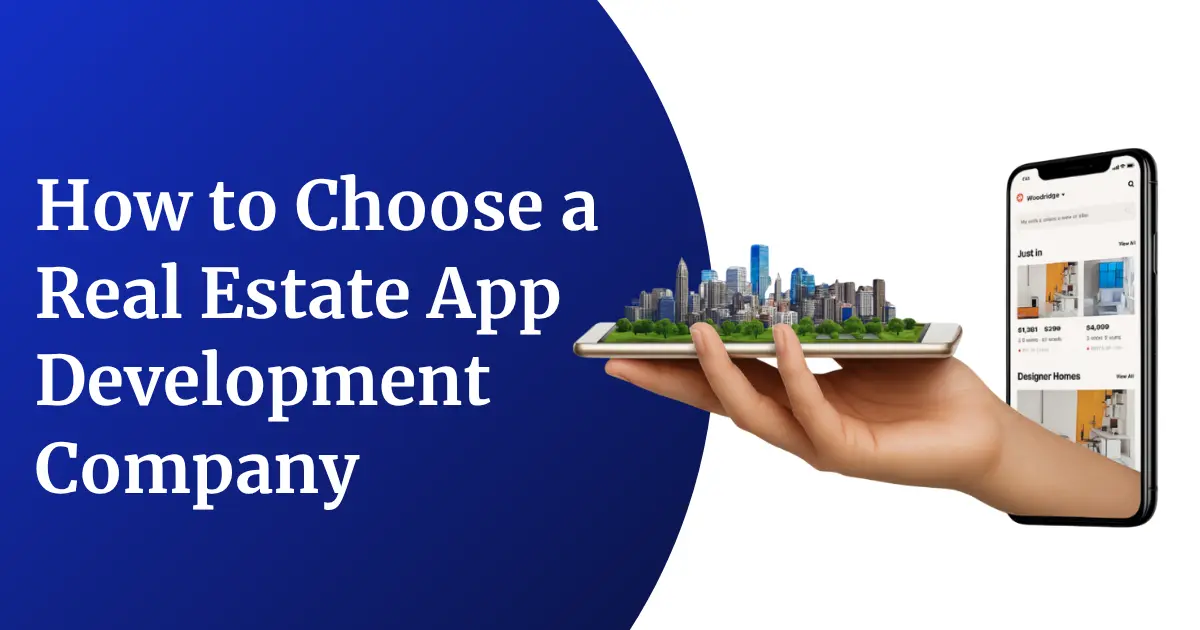
The real estate industry is changing fast. Buyers scroll through listings on their phones before they even talk to an agent. Renters compare properties from their sofas. Investors track markets in real time from any corner of the world. If your real estate business does not have a strong mobile presence, you are already a step behind.
But building a real estate app is not as simple as hiring the first developer you find online. The right real estate app development company can turn your idea into a product that drives leads, closes deals, and builds long-term client loyalty. The wrong one can cost you months of time and thousands of dollars with little to show for it.
This guide walks you through everything you need to know before signing a contract with a real estate app development agency. From understanding what real estate app development actually involves, to the key questions you must ask, and how GrowRankers helps businesses like yours build apps that actually perform, this is your complete decision-making resource.
What Is Real Estate App Development?
Real estate app development is the process of designing, building, and launching a mobile or web-based application tailored specifically for the real estate market. These apps are built to serve buyers, sellers, renters, landlords, property managers, and real estate agents, making property search, management, and transactions faster and more efficient.
Unlike a generic business app, a real estate app comes with a specific set of features that are unique to the property industry. These include property listings with photos and floor plans, map-based search, mortgage calculators, virtual property tours, agent directories, document management tools, booking systems for site visits, and CRM integrations for agents to manage their leads.
Real estate app development can take several forms depending on your business model and target audience.
| App Type | Who It Serves | Key Features |
| Property Listing App | Buyers and Renters | Search filters, map view, price alerts, wishlists |
| Agent and Broker App | Real Estate Agents | Lead management, CRM, appointment scheduling, client chat |
| Property Management App | Landlords and Property Managers | Rent collection, maintenance requests, tenant communication |
| Real Estate Investment App | Investors | Market analytics, ROI calculators, portfolio tracking |
| Virtual Tour App | Buyers and Sellers | 360-degree tours, AR walkthroughs, video integration |
| Commercial Real Estate App | Businesses and Enterprises | Office listings, lease tracking, location intelligence |
Commercial Real Estate App Businesses and Enterprises Office listings, lease tracking, location intelligence
Each of these app types requires a different approach to design, technology stack, and feature prioritization. That is why choosing a real estate app development company that understands your specific niche is so important. A company that has only built rental apps may not be the best fit if you are building an investment analytics platform.
Why Your Real Estate Business Needs a Mobile App Right Now
You might be wondering whether a mobile app is really worth the investment. The numbers speak for themselves. The real estate industry is experiencing a massive shift toward digital, and businesses without a mobile-first strategy are losing market share at an accelerating rate.
The Market Is Growing, and It Is Digital-First
The global real estate market was valued at over USD 3.69 trillion in 2021 and is expected to reach USD 5.85 trillion by 2030, growing at a CAGR of around 5.2 percent according to data from Allied Market Research. At the same time, online real estate platforms and apps are now the primary way people begin their property search.
According to the National Association of Realtors, 90% of homebuyers used the internet to search for homes in 2023, with the vast majority starting their journey on a mobile device. This is not a trend. It is the new normal.
Property technology, commonly known as PropTech, is now a thriving global industry. Investment in PropTech companies exceeded USD 32 billion globally in recent years, and the appetite for mobile-first real estate solutions continues to grow rapidly across both mature and emerging markets.
What a Real Estate App Can Do for Your Business
A well-built real estate app delivers measurable business benefits that go far beyond just having a digital presence. Here is what you can expect when you invest in the right solution.
| Business Benefit | How It Helps | Impact |
| More Lead Generation | Push notifications and saved searches bring users back | Higher conversion from browsing to inquiry |
| Better Client Experience | Instant access to listings, tour booking, and agent chat | Reduced drop-off and stronger trust |
| Faster Transactions | Digital documents, e-signatures, and payment integration | Shorter deal cycles |
| Market Differentiation | Branded app with unique features sets you apart from competitors | Stronger brand recall and loyalty |
| Data and Insights | Track user behavior, popular listings, and demand trends | Smarter business decisions |
| 24/7 Availability | App works round the clock without staff involvement | More inquiries outside business hours |
A real estate app is not just a marketing tool. It is an operational asset that can reduce manual workload, improve client satisfaction, and directly contribute to your bottom line. If your competitors already have apps and you do not, you are giving them a head start that becomes harder to recover from over time.
Questions You Must Ask Before Hiring a Real Estate App Development Agency
Choosing the right real estate app development company is one of the most important decisions you will make for your business. The market is full of agencies claiming expertise, but not all of them can deliver what you actually need. Before you sign any contract or pay any deposit, make sure you get clear answers to the following questions.
1. Do You Have Experience Building Real Estate Apps Specifically?
General app development experience is not the same as real estate app development expertise. Real estate apps have unique challenges including MLS and property data integrations, map-based interfaces, compliance requirements around property listings, and complex user journeys involving multiple stakeholders such as buyers, sellers, agents, and lenders.
Ask for a portfolio of real estate apps they have built. Look for case studies that are similar to your use case. If they have built listing apps but you need a property management platform, dig deeper into their technical capabilities and whether they can adapt.
2. What Tech Stack Do You Use and Why?
The technology stack your app is built on will affect its performance, scalability, maintenance costs, and future upgrade potential. A good agency will be transparent about their recommended stack and able to explain why it suits your project.
| Layer | Common Technologies | What to Look For |
| Frontend (Mobile) | React Native, Flutter, Swift, Kotlin | Cross-platform vs native based on your audience |
| Backend | Node.js, Python, Ruby on Rails, Java | Scalability and API capabilities |
| Database | PostgreSQL, MongoDB, Firebase | Structured vs flexible data needs |
| Maps and Location | Google Maps API, Mapbox, HERE | Accuracy, pricing, and customization options |
| Cloud Infrastructure | AWS, Google Cloud, Azure | Reliability, scaling, and data security |
| Property Data | Zillow API, MLS feeds, RapidAPI | Real-time listing accuracy and coverage |
Be cautious of agencies that recommend only proprietary or obscure technologies without a clear justification. You want your app built on widely supported, future-proof technologies that are not locked into a single vendor.
3. How Do You Handle Project Management and Communication?
Communication breakdowns are one of the most common reasons app development projects fail or run over budget. Ask the agency how they manage projects, what tools they use for task tracking and communication, and how often you will receive updates.
Look for agencies that follow Agile or Scrum methodologies, as these allow for iterative development, regular feedback, and flexibility when your requirements evolve. Make sure you will have a dedicated point of contact throughout the project, not just a sales representative who disappears after the contract is signed.
4. What Does Your Development Process Look Like From Start to Launch?
A professional real estate app development company will have a clearly defined process that covers every phase of the project. This typically includes discovery and requirements gathering, wireframing and UI/UX design, development and quality assurance, testing, launch, and post-launch support. Ask for a detailed breakdown of each phase and realistic timeframes for each milestone.
Be wary of agencies that jump straight to development without a thorough discovery phase. Skipping this step often leads to apps that miss the mark on user experience or have to be rebuilt from scratch partway through.
5. How Do You Approach UI/UX Design for Real Estate Apps?
Design is not just about how your app looks. It is about how your users feel when they use it. Real estate apps involve complex information including floor plans, pricing, location data, legal documents, and agent profiles. Making all of this accessible and easy to navigate requires real expertise in user experience design.
Ask to see design mockups or prototypes from previous real estate projects. Ask how they conduct user research and whether they do usability testing before development begins. An agency that treats design as an afterthought will produce an app that frustrates users rather than delighting them.
6. What Security and Compliance Standards Do You Follow?
Real estate apps handle sensitive information including personal identification documents, financial data, property ownership records, and transaction histories. Your app needs to meet strict security standards to protect your users and your business from data breaches and legal liability.
Ask about their data encryption practices, authentication mechanisms, compliance with privacy regulations such as GDPR or CCPA, and how they handle third-party integrations from a security perspective. If they cannot give you detailed answers, that is a serious warning sign.
7. How Do You Handle App Maintenance and Post-Launch Support?
Launching your app is not the finish line. It is the starting point. Operating systems update, user behaviors change, bugs surface, and new features need to be added. You need an agency that will be available to support your app after it goes live.
Ask whether post-launch support is included in the contract, what their response time is for critical bug fixes, and how they handle version updates when iOS or Android releases new versions. Agencies that do not offer structured post-launch support will leave you scrambling when something goes wrong.
8. Can You Integrate With Third-Party Tools and Platforms?
Most real estate businesses already use CRMs, marketing automation tools, ERP systems, and property data platforms. Your app needs to connect with these seamlessly. Ask the agency about their experience with third-party API integrations and which platforms they have worked with before.
Important integrations for real estate apps typically include MLS databases for live listing data, payment gateways like Stripe or PayPal, CRM tools like Salesforce or HubSpot, e-signature platforms like DocuSign, and analytics tools like Google Analytics or Mixpanel.
9. What Are Your Pricing Model and Payment Terms?
Transparent pricing is a sign of a trustworthy agency. Be wary of unusually low quotes that do not account for discovery, testing, and post-launch support. Also be cautious of agencies that ask for large upfront payments without clear milestones.
Ask for a detailed cost breakdown that separates design, development, QA, project management, and support. Understanding what you are paying for at every stage protects you from scope creep and budget surprises.
For a detailed understanding of real estate app development costs, you can check out GrowRankers’ comprehensive guide on the cost of real estate app development which covers budgeting for apps similar to Zillow and other major platforms.
10. Do You Offer a Discovery Phase Before Full Development Begins?
A discovery phase is a structured research and planning exercise that happens before development begins. It helps define the scope of your app, map out the user journey, identify potential risks, and finalize the technical architecture. Agencies that offer this service are invested in getting your project right from the beginning rather than just billing hours.
Ask what the discovery phase includes, how long it takes, and whether the deliverables such as wireframes, user stories, and a technical specification document are shared with you. These documents should belong to you regardless of whether you continue with the same agency for development.
Green Flags and Red Flags When Evaluating a Real Estate App Development Company
Even after asking all the right questions, it helps to know what a great agency looks and feels like compared to one that will let you down. Here is a quick reference guide to help you evaluate your options.
| Green Flags | Red Flags |
| Dedicated real estate app portfolio with live apps | Only generic app examples with no real estate experience |
| Clear project timeline with milestone-based deliverables | Vague timelines with no defined checkpoints |
| Transparent, itemized cost breakdown | Suspiciously low quotes or hidden fees discovered later |
| Agile development with regular client updates | Waterfall-only approach with minimal client involvement |
| Dedicated project manager throughout the project | No dedicated contact after contract signing |
| Post-launch support plan included in contract | No mention of maintenance or support after launch |
| Strong design portfolio with real estate UX examples | No wireframes or prototypes shown during proposal |
| References from past real estate clients available | Reluctance to share client contact information |
How GrowRankers Helps You Build a Real Estate App That Drives Business Results
At GrowRankers, we understand that building a real estate app is not just a technical project. It is a business investment that needs to pay off. Our team of experienced developers, designers, and digital strategists work closely with real estate businesses to build apps that are not just functional but genuinely impactful.
Here is what makes GrowRankers different from most real estate app development agencies you will encounter.
Deep Real Estate Industry Experience
GrowRankers has worked with real estate businesses across residential, commercial, rental, and investment segments. We understand the unique requirements of this industry, including property data integrations, agent management workflows, regulatory compliance, and the specific expectations of property buyers and renters when they use a mobile app.
Our portfolio includes apps built for property listing platforms, agent CRMs, property management tools, and real estate investment dashboards. We do not just build apps. We build solutions that fit the operational realities of real estate businesses.
End-to-End Development From Idea to Launch
We manage every phase of your app development journey in-house. From the initial discovery session where we map out your goals and user journeys, through design, development, quality assurance, and launch, GrowRankers is your single point of accountability throughout.
You will always know what is being built, why decisions are being made, and where your project stands in relation to the agreed timeline and budget. No surprises, no sudden scope changes, no unexplained delays.
Mobile-First, Scalable Architecture
We build real estate apps designed to grow with your business. Whether you are launching a city-specific listing platform or planning to scale across multiple regions, our technical architecture ensures your app can handle increasing users, data volumes, and feature additions without performance degradation.
Our apps are built using proven, widely supported technologies with clean, maintainable codebases that make future updates and integrations straightforward and cost-effective.
User Experience Designed Around Real Estate Workflows
Our design team specializes in creating app interfaces that simplify complex real estate information for everyday users. Whether your users are first-time homebuyers navigating listings, landlords managing multiple properties, or investors tracking market trends, we design experiences that make their goals easy to achieve.
Every design decision is grounded in user research and validated through testing before development begins. The result is an app that feels intuitive and natural to use, which directly impacts engagement, retention, and conversion.
Transparent Pricing and Milestone-Based Delivery
We provide detailed cost breakdowns at every stage of the project. Our milestone-based payment structure means you only pay as deliverables are completed and approved, which keeps us accountable and gives you full control over your investment.
We also offer flexible engagement models including fixed-price projects for well-defined scopes, dedicated team arrangements for ongoing development, and time-and-material contracts for projects where requirements may evolve.
Interested in exploring what the right real estate app development partner looks like? Start with our guide to the top real estate app development companies in India to benchmark your options, and check out our overview of the
top real estate app development companies in the USA to understand what the leading global players offer.
Ready to move forward? Visit our dedicated real estate app development services page to learn more about what GrowRankers can build for your business.
GrowRankers Real Estate App Development Services
Key Features Every Real Estate App Should Have in 2026
Before you engage with any development agency, it is worth understanding what features a competitive real estate app must include in 2026. This knowledge helps you have better conversations with potential partners and evaluate their proposals more effectively.
| Feature Category | Specific Features | Priority Level |
| Property Search | Advanced filters, keyword search, neighborhood search, saved searches | Must-Have |
| Map Integration | Interactive maps, proximity search, school and transit layers | Must-Have |
| Listing Details | High-res photos, video tours, floor plans, price history | Must-Have |
| User Accounts | Registration, profile management, saved properties, alerts | Must-Have |
| Communication Tools | In-app chat, agent contact, tour scheduling | Must-Have |
| Financial Tools | Mortgage calculator, affordability estimator, EMI breakdown | Recommended |
| Virtual Tours | 360-degree views, AR walkthroughs, video integration | Recommended |
| Admin Dashboard | Listing management, user analytics, lead tracking | Must-Have |
| Push Notifications | Price drop alerts, new listing notifications, appointment reminders | Recommended |
| Document Management | Digital contracts, e-signature, document upload and storage | Recommended |
Understanding these features gives you a basis for evaluating agency proposals. Any agency that does not mention these essentials in their initial proposal is either not experienced in real estate app development or is not taking your project requirements seriously.
How to Evaluate a Real Estate App Development Company’s Portfolio
A portfolio tells you more about an agency than any sales pitch ever will. When reviewing potential partners, here is what to look for in their previous work.
First, look for apps that are actually live in the App Store or Google Play, not just mockups or screenshots. A live app means the agency successfully took a project through launch, which is a critical milestone that many projects fail to reach.
Second, download the apps and use them yourself. Does the interface feel clean and intuitive? Does the app load quickly and respond smoothly? Are the property listings easy to browse and filter? Your users will judge your app by these same standards, so make sure your development partner is capable of delivering this quality.
Third, look at the scale of the apps in their portfolio. An agency that has only built small, single-feature apps may struggle with a complex, multi-role platform. Ask specifically about the largest and most complex project they have delivered and what challenges they encountered along the way.
For independent context on what makes a strong real estate digital platform, the National Association of Realtors publishes detailed research on how buyers and sellers interact with digital tools, which is excellent reference material when defining your app requirements.
Realistic Timelines for Real Estate App Development
One of the most common questions from businesses planning a real estate app is how long development will take. The honest answer is that it depends on the complexity of your app, but here is a general guide to set realistic expectations.
| App Complexity | Typical Features | Estimated Timeline | Approximate Cost Range |
| Basic MVP | Listings, search, user accounts, contact forms | 2 to 4 months | USD 15,000 to 30,000 |
| Mid-Level App | Maps, in-app chat, agent profiles, notifications, admin panel | 4 to 7 months | USD 30,000 to 70,000 |
| Full-Featured Platform | Virtual tours, CRM, payment gateway, analytics, multi-role access | 7 to 12 months | USD 70,000 to 150,000+ |
These ranges are approximate and will vary based on your location, the agency’s hourly rates, the technology stack chosen, and the specific features you require. Any agency that quotes a dramatically shorter timeline or significantly lower cost without a detailed technical scope should be approached with caution.
Frequently Asked Questions About Choosing a Real Estate App Development Company
1. How do I know if a real estate app development company is trustworthy?
Look for verifiable client testimonials, a portfolio of live apps, and the ability to provide references from past real estate clients. Trustworthy agencies are transparent about their processes, pricing, and timelines and do not pressure you into signing contracts before answering your questions thoroughly.
2. What is the difference between a real estate app and a property website?
A real estate app is a native or hybrid mobile application built specifically for iOS and Android devices, offering features like push notifications, offline access, and device-level integrations such as GPS and camera. A property website is browser-based and accessible from any device but typically offers a less immersive and interactive experience compared to a dedicated app.
3. Should I build a native app or a cross-platform app for my real estate business?
Native apps offer the best performance and user experience but cost more because they require separate codebases for iOS and Android. Cross-platform apps, built using frameworks like React Native or Flutter, share a single codebase across both platforms and are more cost-efficient. For most real estate businesses, cross-platform development offers the best balance of quality and cost.
4. How much does it cost to build a real estate app?
The cost depends on the features, complexity, platform, and the location of your development team. A basic MVP can cost USD 15,000 to 30,000, while a full-featured platform with virtual tours, CRM integration, and payment processing can cost USD 100,000 or more. GrowRankers provides detailed, transparent quotes based on your specific requirements.
5. How long does real estate app development take?
A simple MVP typically takes two to four months. A mid-level app with maps, agent features, and admin tools takes four to seven months. A complex, enterprise-grade platform can take nine to twelve months or longer. Rushing development to meet an unrealistic timeline is a common cause of poor quality and post-launch bugs.
6. Can GrowRankers integrate my real estate app with MLS data?
Yes. GrowRankers has experience integrating real estate apps with MLS databases and property data APIs to provide live, accurate listing information within your app. We manage the technical complexity of these integrations so your listings are always current and compliant with data usage requirements.
7. What is a real estate app MVP and should I build one first?
An MVP, or minimum viable product, is a version of your app with only the core features needed to serve your initial users and validate your concept in the market. Building an MVP first is a smart strategy for most real estate businesses because it lets you gather real user feedback, test market demand, and refine your vision before investing in a full-featured platform.
8. How do I protect my app idea before sharing it with a development agency?
Ask the agency to sign a non-disclosure agreement, commonly known as an NDA, before sharing sensitive details about your concept, business model, or proprietary workflows. Reputable agencies will have no hesitation signing an NDA. You should also document your app concept in writing before any meetings so you have a clear record of what you shared and when.
9. What ongoing support should I expect after my real estate app is launched?
After launch, you should expect at minimum a bug-fixing warranty period covering any issues directly related to the development work. Beyond this, good agencies offer ongoing maintenance packages that cover OS updates, security patches, performance monitoring, and feature additions. GrowRankers offers structured post-launch support plans tailored to the size and complexity of your app.
10. Why should I choose GrowRankers over other real estate app development agencies?
GrowRankers combines deep real estate industry knowledge with proven technical expertise and a track record of delivering apps that perform. We take a business-first approach to every project, meaning we prioritize features and design decisions that drive real outcomes for your business rather than just ticking technical boxes. Our transparent pricing, Agile development process, and dedicated project management make us a reliable partner from concept to launch and beyond.
Conclusion: Make the Right Choice for Your Real Estate App
Choosing the right real estate app development company is not a decision to rush. The agency you select will be responsible for one of the most important digital assets your business owns. They need to understand the real estate industry, communicate clearly, deliver on time, and support you long after launch.
Take your time to evaluate portfolios, ask the hard questions, and compare proposals carefully. Use the tables and frameworks in this guide to structure your evaluation. And when you are ready to talk to a team that genuinely understands what it takes to build a successful real estate app, GrowRankers is here to help.
We have helped real estate businesses across residential, commercial, rental, and investment segments build apps that generate leads, improve client experience, and support long-term growth. Let us do the same for you.
Get in touch with GrowRankers today to start your real estate app development journey.